

 THE NATIONAL UNION OF
JOURNALISTS OF UKRAINE

Statement of the International Advisory Council of the Journalists’ Solidarity Centers
November 2026
The local newspaper Zorya in Zolochiv, near the Russian border, has received a generator to help its newsroom keep working during power cuts. Reporters in Kharkiv can borrow drone detectors before travelling to dangerous areas. Journalists who have lost their workplaces can find electricity, internet access and practical help at Ukraine’s Journalists’ Solidarity Centers.
This is what international solidarity looks like in practice.
Established by the National Union of Journalists of Ukraine (NUJU) in 2022 with the support of international partners, the Journalists’ Solidarity Centers now operate in seven locations across Ukraine. They offer protective equipment, emergency assistance, safety training, legal and psychological support, and places where journalists can continue working despite the war.
Between 2022 and July 2026, the Centers recorded 10,573 requests for assistance. International support has also helped local media keep publishing. Through the Frontline Press programme, 25 frontline newspapers received direct financial support to continue publishing.
Several members of our International Advisory Council have visited Ukraine and seen firsthand how these services help journalists continue their work. We thank UNESCO, IFJ and EFJ, international journalists’ organisations, Nordic publishers, journalists’ unions and the many other partners who have made this possible.
Another winter, growing pressures
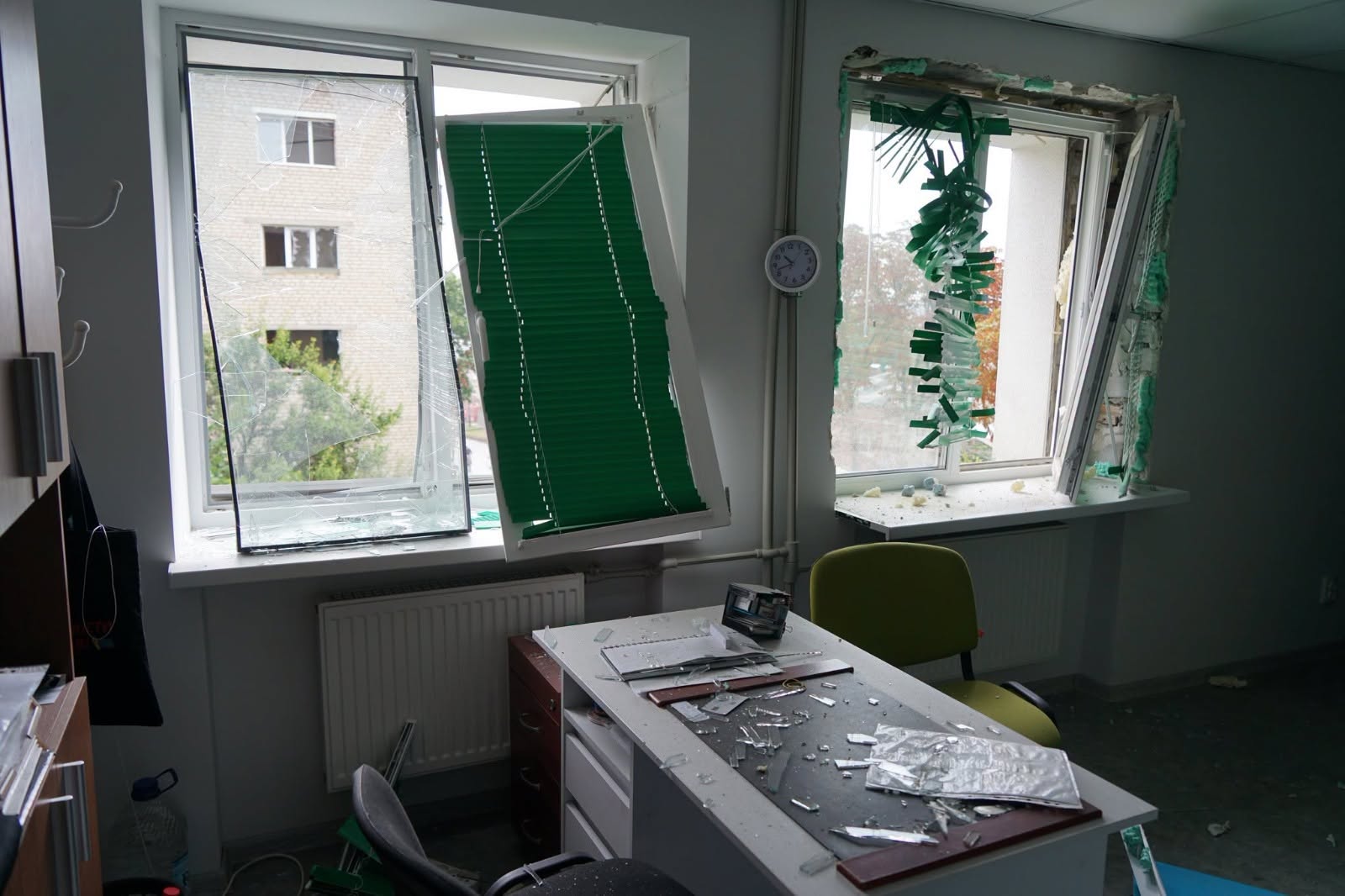
Russia’s attacks on Ukraine’s energy infrastructure continue to disrupt daily life and work. Even in Kyiv, journalists sometimes have electricity for only a few hours during the working day.
For reporters covering the war, drones are an increasingly serious danger. For local newsrooms, the cost of staying open keeps rising. Some journalists need to relocate urgently. Others need something as simple as a few nights of uninterrupted sleep away from air raid alerts. Women journalists caring for children or elderly relatives often face additional difficulties finding a safe place to stay.
Solidarity also means standing up for colleagues imprisoned by Russia. A Russian-controlled court has sentenced 65-year-old Ukrainian journalist and NUJU member Iryna Levchenko to 15 years in prison. Her case is a reminder of why international pressure for the release of detained Ukrainian journalists must continue.
The Centers have become part of the support that journalists rely on. But equipment needs replacing, emergency needs arise without warning, and the people running these services need reliable funding.
What the international media community can do
- Organise a solidarity initiative this winter.
We invite national journalists’ unions and associations affiliated with the International Federation of Journalists (IFJ) and the European Federation of Journalists (EFJ) to consider organising at least one voluntary fundraising or solidarity initiative during the winter of 2026–2027.
A collection among members, a contribution from a union solidarity fund or a fundraising event can all help. NUJU and trusted international partners can work with interested organisations to identify practical ways of transferring contributions and directing them to journalists in need.
- Involve publishers and media employers.
Publishers can help Ukrainian newsrooms with equipment, backup power, financial contributions or direct partnerships. National publishers’ associations and international networks, including WAN-IFRA, could bring more media companies into these efforts. A partnership with a frontline newspaper or regional newsroom can provide support that is both practical and sustained.
- Keep the Solidarity Centers operating.
We encourage international donors and foundations to provide predictable funding for the Centers’ staff, services and essential running costs, alongside support for equipment.
A drone detector or generator can make a difference only when it reaches the journalists who need it. Experienced local teams make that possible. They also respond to urgent requests that cannot be anticipated in a project plan, from emergency relocation to assistance for freelancers.
- Help independent frontline media survive.
Small newspapers, radio stations and online newsrooms need direct, flexible support for salaries, printing, distribution, equipment and other basic costs.
In communities close to the fighting, local journalists report on evacuation, public services and the everyday decisions people must make to stay safe. Printed newspapers remain especially valuable where electricity and internet access are unreliable. Keeping these newsrooms working is part of keeping their communities informed.
- Maintain professional ties and speak out for detained journalists.
Invite Ukrainian journalists to conferences and professional exchanges, share their reporting and build partnerships between newsrooms. International colleagues can also visit Ukraine when security conditions allow, and help bring Ukrainian journalists’ experiences to wider audiences.
We ask journalists’ organisations to keep raising the cases of colleagues imprisoned by Russia and pressing for their release.
An effort we can sustain together
The international media community has helped Ukrainian journalists build a network that responds to real needs. Sustaining it should now become a responsibility shared by a wider circle of professional organisations and partners.
We thank everyone who has stood alongside Ukrainian journalists since 2022 and invite others to join this effort in the months ahead.
International support for Ukrainian journalists is working. Now is the time to sustain and strengthen it.
International Advisory Council of the Journalists’ Solidarity Centers
Signatories endorse this statement in their personal capacity; affiliations are listed for identification purposes only.
Anna Del Freo — Vice-President, Association of Journalists of Lombardy; former member of the EFJ Steering Committee
Tine Johansen — Principal, Brandbjerg Højskole; former President, Danish Union of Journalists
Ruth Kronenburg — Executive Director, Free Press Unlimited
Jennifer Moreau — Vice-President, International Federation of Journalists; Unifor (Canada)
Randi S. Øgrey — CEO, Norwegian Media Businesses’ Association; Chair, Ukrainian Media Fund Nordic
Andrea Roth — Vice-President, Bavarian Journalists’ Association; Chair of the Europe Commission of the German Journalists’ Association (DJV); member of the EFJ Steering Committee
Mogens Schmidt — Senior Adviser on Press Freedom and Media Development; Chair, IRMI Ukraine; former Deputy Assistant Director-General of UNESCO
Convened and coordinated by the National Union of Journalists of Ukraine:
Sergiy Tomilenko — President, National Union of Journalists of Ukraine
Lina Kushch — First Secretary, National Union of Journalists of Ukraine
About the Journalists’ Solidarity Centers
Established in April 2022 by the National Union of Journalists of Ukraine with support from the IFJ and EFJ, the Centers assist journalists and media organisations affected by Russia’s war. The network operates in Kyiv, Kharkiv, Dnipro, Zaporizhzhia, Sumy, Lviv and Ivano-Frankivsk.










Discussion about this post