

 THE NATIONAL UNION OF
JOURNALISTS OF UKRAINE

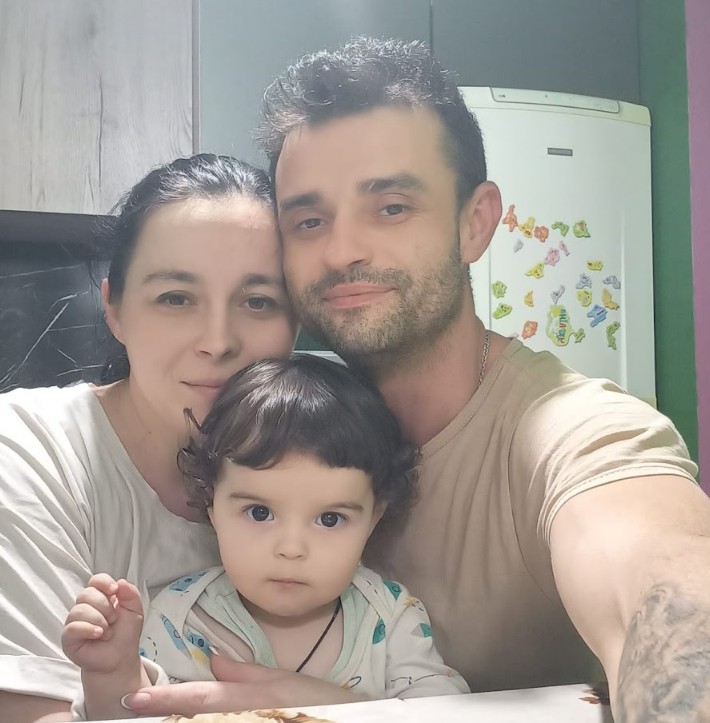
The bus carrying the prisoners came to a stop. The guards ordered them to sit with their heads bowed to their knees. When the Ukrainian soldiers stepped off the bus, they saw the Russian prisoners being handed over by the Ukrainian side in the exchange. “The Russians were clean, in their own uniforms—some even wearing glasses. This was shocking, because our men had their glasses smashed immediately, and their military uniforms taken away. They looked down at us with contempt—emaciated, with darting eyes, terrified.” This is an excerpt from the account of former Ukrainian prisoner of war Ivan Prodan, who was able to return home as part of a “45-for-45” prisoner exchange between Ukraine and Russia that took place on July 6, 2023.
Prodan told his story to Iryna Voronkina, editor of Nove Zhyttia (“New Life”), the newspaper of the Blyzniuky community in the southern Kharkiv region. For more than 90 years, the paper has been the main source of news for the area, and since the full-scale invasion it has become a chronicle of a community living close to the front line, reporting on the security situation and humanitarian aid and regularly telling the stories of local residents and the soldiers who defended the region. Prodan’s own path runs through Blyzniuky: in the first weeks of the war, his brigade helped local Territorial Defense fighters build trench positions around the settlement before being sent into battle.
A Strange Dream and a Jar of Jam
Ivan Prodan speaks about his time in Russian captivity calmly, in a measured tone, as though arranging his life on shelves. He enlisted in the military four days after Russia launched its full-scale invasion of Ukraine—on February 27, 2022.
He was assigned to the Novomoskovsk Air Assault Brigade “Hvardiisk”—a Ukrainian airborne infantry unit. Training lasted a week, and then his unit was deployed to the settlement of Blyzniuky in the Kharkiv region. For ten days, the soldiers helped local Territorial Defense fighters—civilian volunteer units formed across Ukraine to defend their communities—build defensive trench positions to slow the enemy advance. Then the brigade was redeployed to another village. Heavy fighting followed. At that point, Ukrainian forces had nothing to fight back with other than their personal weapons. Through combat and losses, but in order to save those still alive, the air assault brigade was forced to retreat. That was April 1, 2022. On that day, in the village of Mala Komyshuvakha, Ivan Prodan suffered a concussion from a blast.
“I lost consciousness for a while after a mine exploded nearby, and I became disoriented because I had no communications. I got separated from my group. I went back to where our command post was supposed to be. I ran into a church, thinking someone might be inside, because I saw a rifle propping open the door. In response to my shouts—’Is anyone here?’—I felt the walls and all the icons with their saints’ faces tremble, because shelling had started again. I ran out, dashed into a yard next to the church, where my comrades had recently been hiding in a basement—but it was empty too. I saw a packet of syringes and painkillers, and automatically stuffed my pockets with them. To make it easier to run, I dropped my ammunition, and only then did I realize that our forces had pulled back and I had been left alone.”
He began heading toward the town of Barvinkove when he heard the buzzing of a drone overhead.
“I dropped to the ground. I realized the quadcopter was searching for survivors, so I froze—as if Iʼd been killed. The drone hovered over me and then flew on. I started running again. But then—another explosion. I was knocked off my feet and covered with dirt.”
He recalls that while lying semiconscious, he had a dream: the sky was covered in clouds, lightning split the darkness, thunder rumbled, and heavy rain poured down. “I dreamed that water was flooding over me and I couldn’t do anything about it, but I had to get up,” the man recalls. “I managed to come to. I began climbing out of the crater, holding onto the grass. In the distance, I saw the silhouette of a burning house, but I didnʼt care what was happening around me. I walked, fell, got up, and crawled. I reached that house. And as I was going around it, about two houses away, Russian soldiers were standing there. They were smoking, talking among themselves. I froze just a few meters from them, but luckily they didn’t notice me. By that time, the enemy was already sweeping the village. And I kept moving somewhere, as though something was guiding me, and I was desperately thirsty. I donʼt know how I found the collapsed entrance to a basement, into which I fell, and groped around until I found a jar of preserves. I pried the lid open with my teeth and fingernails and smelled the aroma of raspberry jam. It was unbelievable: the scent of my grandmother’s most delicious raspberry jam in the world had intruded into the horror film in which I was a character.”
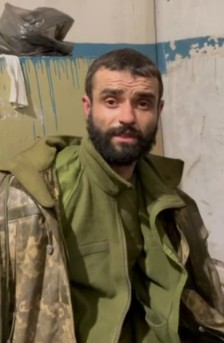
“Robinson”
He felt better. Summoning his last reserves of strength, he climbed out of the basement and fell asleep nearby, under the open sky.
Ivan was woken by loud bursts of automatic gunfire. He looked himself over to assess his condition. His arms and legs had torn, bleeding, painful wounds, but overall he was functional. Nearby, he spotted an old clay house. Its owners had left before the war, and in the collapsed entrance to the root cellar, there was an opening—into which the soldier crawled, finding a hiding place that would shelter him for the next 15 days.
He made sorties, observed the movement of enemy convoys. He waited for a chance to slip through to Ukrainian-held territory, or for his own forces to return. The painkillers he had grabbed proved invaluable—physically, the pain was manageable. He rummaged through destroyed houses and sheds in search of food, taking candle stubs and whatever clothing he could find. He even brought a book back to his basement—he read it for comfort. On another day, he found four packets of military dry rations and a sleeping bag.
“There was a lot of free time, and the medication kept the pain at bay. So when my head was clear, I would start analyzing my life,” Ivan says. “I thought about my mother, whom I had managed to get out of her hometown before the Russians arrived. And I knew for certain that I had to survive, because my family was worried about me.”
During his time hiding right under the enemyʼs nose, he came dangerously close to being discovered twice—but intuition saved him.
Once, he ventured out to warm himself in the sun. Suddenly, he heard voices right next to him. He darted back into the darkness of the basement. “That very second, someone peered into ‘my yard’ and shouted: ‘Valera, itʼs an abandoned house—nobodyʼs here. I’m moving on.’”
The second close call came when a platoon of Russian paratroopers moved into the neighboring house. “It was raining. I was about to go out looking for food. I hear a vehicle pull up, people with flashlights run into the yard. They sweep the walls with their beams, and Iʼm right there beside them, holding my breath, standing behind a corner. They say: ‘This cellar is basically dry—four of us could set up here.’ They shone the flashlight around but, fortunately, decided not to ‘set up,’” Prodan says with a smile.
Time passed, his own forces did not return, so “Robinson”—as his story would come to suggest—began preparing to leave his hiding place. He found a pair of trousers matching a Russian military issue, but could not find a jacket. He waited, hoping his “neighbors” would hang their uniforms out to dry, so he could put on a full enemy uniform and slip away unnoticed. But it didn’t work out.
“That day, I intuitively felt the threat was greater than ever,” Ivan recalls. “I stood watch all night, and around midday I was overcome by sleep. Through the haze, I heard someone dismantling the rubble. I was sleeping in my sleeping bag, pulled over my head, so without coming out of it, I slid into the far corner. My heartbeat grew louder with every beam that was pushed aside. I decided I wouldnʼt try to fight the enemy—I didn’t have the strength. I saw the Russian first—he looked like a calm, older man. For about ninety seconds I watched what he was doing, and then he saw me. The fear in his eyes! Then he bolted out, and I followed him, because I knew he wouldn’t come back alone—and they might throw a grenade. I sprinted in the direction where I thought there were fewer troops, and the thought flashed through my mind: ‘maybe I can still hide?’… I couldn’t.”
Ivan was knocked off his feet, his arms were twisted behind his back, and they began beating him. Above his head, voices shouted: “Bring a rope, break his arms…”
That is how his Russian captivity began.
“Where I was, what to expect next—I didnʼt know,” Ivan recalls. “And that uncertainty was the most terrifying thing. So when they filmed me on camera, strangely enough, I was glad. That way, my family could find out I was alive. About ten times a day, the guards would drag me out of the cell they had set up in one of the schools. They threatened to shoot me, beat me constantly until I lost consciousness, and screamed that I was ‘useless’ because I didnʼt know my commanderʼs name or my unit’s location. And I really didnʼt know. During the interrogation, I even regretted not knowing—but later, when the pain from the beatings subsided, I was glad my conscience was clean.”
“The Most Terrifying Place on Earth”
The first prison Ivan was taken to was Pre-Trial Detention Center No. 2 in Oskol, a facility in Russian-occupied territory. All kinds of captured Ukrainian soldiers were brought there: marines from Mariupol, fighters from the Azov Regiment—a Ukrainian National Guard unit that played a central role in the defense of Mariupol and has been a particular target of Russian hostility. Cells held four men each. Prisoners were beaten every day. They were not held there long, and when they were being prepared for transfer to another prison, the guards told them: “Get changed. Youʼll send your things to Zelensky. Youʼre going home—and don’t fight anymore.” Hope flickered among the prisoners, but it was extinguished the moment they were led out of the barracks to the sound of barking dogs, loaded onto a train that carried them for a long time, and then transported by prisoner transport vehicles to Strict-Regime Correctional Colony No. 1 in the Tula region of Russia, located in the city of Donskoi.
Ivan Prodan says: “This is the most terrifying place on earth—a place whose walls are decorated with Nazi swastikas. There were many of us in the block for prisoners of war. Each day, we were given only 50 grams of lukewarm water with about three pieces of pasta floating in it. They beat us every day. We were allowed to sleep twice—two hours each time. I had broken ribs, so my comrades would lift me and lay me down flat. By the time you managed to position yourself so it didn’t hurt, it was already time to get up.”
From Tula, the prisoners were moved out urgently, in a rush—which once again sparked hope of an exchange. But instead, they were taken into terrifying uncertainty once more.
“They stripped us. Into a room measuring about four by four meters, they crammed around 50 men,” Ivan recalls. “They made us raise our hands above our heads to fit more people in, and lower our heads. I recognized a familiar pair of legs, a torso—standing next to me was Serhii Kozhushok. We had shared a cell back in Oskol. He was a soldier in the Armed Forces of Ukraine. I called him ‘Batya’—’Father.’ We looked into each other’s eyes and smiled.”
In this prison, cells held ten people each. Kozhushok was held on the same floor as Prodan, two cells apart, so the men could hear each other’s suffering after interrogations. “They beat us every day, no days off. I had already started looking at it ‘professionally’—I behaved in a way that minimized blows to my weak spots,” Ivan says. “The Russians had one particularly savage fixation: beatings to determine whether a person held nationalist sympathies. They would put you on your knees and beat the soles of your feet while asking questions. One question—one blow—one answer. In Russian prisons, thereʼs a rule: the faster you move, the fewer blows you take. You must not fall. They’ll beat you to death.”
“45 for 45”
Hope of a possible exchange appeared when the prisoners were taken out and put on a plane.
“We flew for some time until the escort remembered they hadnʼt filmed the ‘movie.’ The plane landed, we were brought out, filmed together with generals, given a dry ration each, and they kept filming as we ripped the packets open with our teeth and ravenously chewed the dry food—because we hadnʼt been fed at all for an entire day. I imagine it made for a ‘beautiful video.’ After this farce, we were put on another aircraft, which landed in Belgorod, a Russian city near the Ukrainian border. Semi-transparent bags were placed over our heads. The command was: ‘Run straight.’ And only when I was running closer and recognized a civilian bus did I understand that we were being exchanged.”
This “45-for-45” exchange took place on July 6, 2023, at the border of Ukraineʼs Sumy region. The guards ordered the Ukrainians to sit with their heads bowed to their knees. Meanwhile, the Russian prisoners of war being handed over by the Ukrainian side appeared quite at ease. They were in their own uniforms, and—what struck Ivan Prodan most—they were wearing their own glasses.
“They hadnʼt been beaten, they had been fed, they didnʼt have bags put over their heads, they werenʼt forbidden from raising their eyes—they were treated like human beings. And we—in captivity, we were nothing. Objects. Slaves. Something to be abused.”
When Ivan saw through the bus window the people who had come to meet the freed prisoners, he realized he might not withstand the flood of emotions. So he decided to be the last one off.
“I watched as the men stepped off the bus and fell to the ground, kissing it. I managed to contain myself during the first minutes of the incredible happiness of being on my own soil. After being freed—after constant starvation and adrenaline—you feel an overwhelming love for every person you see. I savored that feeling of unity with the entire world and was not ashamed to tell people about it. Now I realize how strange that must have seemed from the outside,” Ivan says.
Family members were allowed to meet the freed prisoners after a ten-day quarantine.
“I had been waiting for that moment for two years,” the man says, speaking about his reunion with his wife and daughters. However, his personal life had also changed: his wife had not waited for him.
A year after his release, Ivan Prodan returned to the front. He fought until the end of 2024. Now he has a new family—a new wife and a third daughter. They gave her a name that is deeply symbolic for her father: Vira, the Ukrainian word for “Faith.”
Original article by Iryna Voronkina. Translated and adapted for international audiences.
________________________________________________________________
Nove Zhyttia (meaning “New Life”) is the main newspaper of the Blyzniuky community and has served as the primary source of news for residents of the southern part of Ukraineʼs Kharkiv region for over 90 years. Having undergone a successful reform process, the paper has transformed into a modern independent platform that combines a traditional print edition with an active presence on social media and its own web portal.
During the full-scale war, the editorial team has become a vital communication link between local authorities and the community, providing timely reporting on the security situation, humanitarian aid, and the lives of local residents serving as defenders. The outlet actively uses digital tools to cover stories of local resistance and recovery. As a participant in initiatives to strengthen regional media resilience, including the Frontline Press program (implemented with the support of the National Union of Journalists of Ukraine and its international partners), Nove Zhyttia is preparing to introduce innovations in 2026. The newspaper remains a living chronicle of its region, proving that even in small communities, journalism can be technologically advanced and impactful.
Official website: newlife.kh.ua.
Nove Zhyttia is one of 25 local and regional media outlets participating in the Frontline Press support program, funded by the Swedish media business association Tidningsutgivarna. The program supports professional journalism about life in Ukraine’s frontline communities. The National Union of Journalists of Ukraine (NUJU) is happy to share these stories with international media for republication. To request permission to republish this or other materials produced through the Frontline Press program, please contact [email protected].









Discussion about this post