

 THE NATIONAL UNION OF
JOURNALISTS OF UKRAINE
THE NATIONAL UNION OF
JOURNALISTS OF UKRAINE
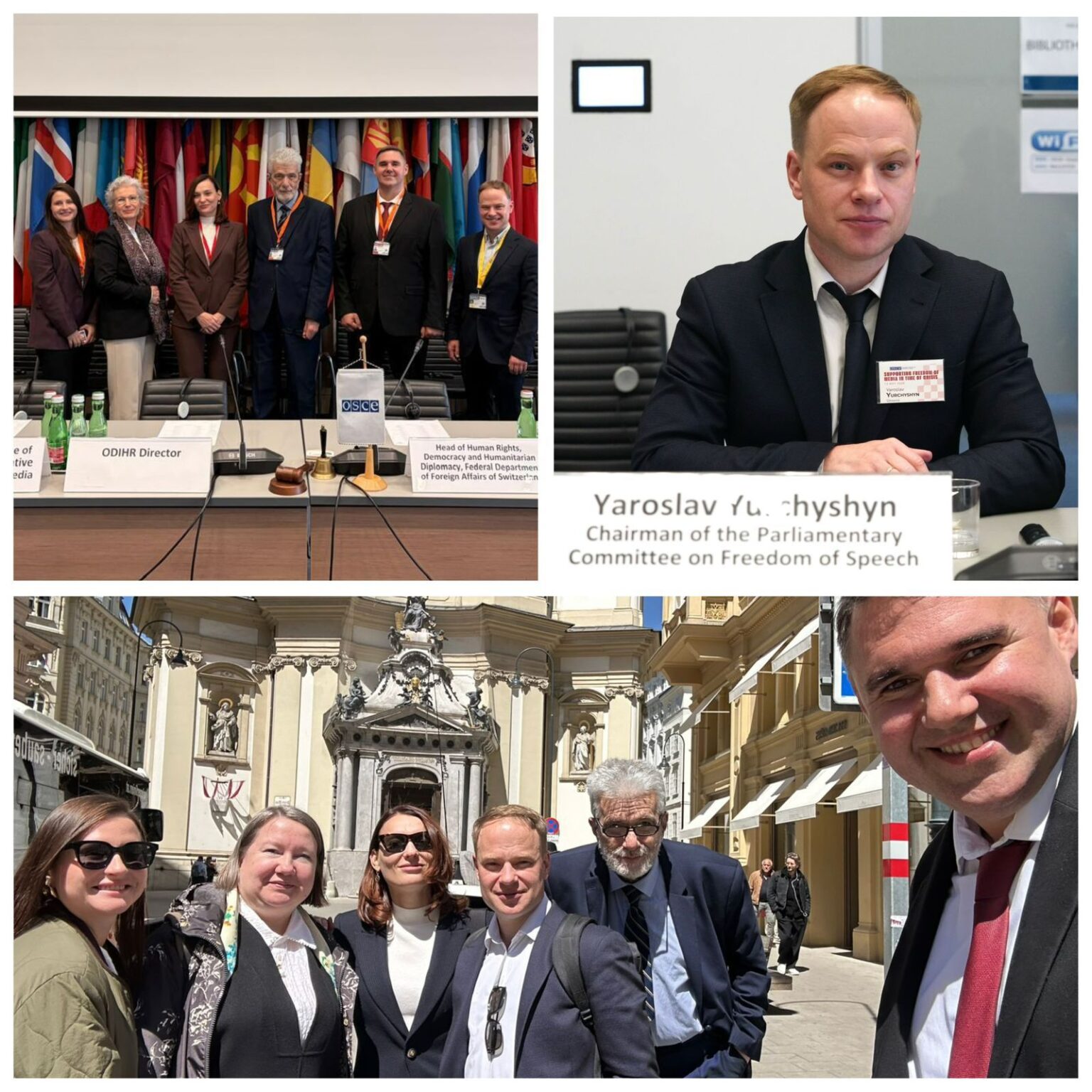
The Ukrainian delegation at the Organization for Security and Co-operation in Europe (OSCE) meeting in Vienna called on the 37 participating states to adapt international media security standards to the modern realities of war. The head of the parliamentary Committee on Freedom of Speech, Yaroslav Yurchyshyn, emphasized that traditional protection protocols no longer work, as the russian occupiers deliberately choose the ‘PRESS’ label as a target for attacks, which forces us to reconsider approaches to the technical protection of military journalists on the front line and in the digital space. Thus, Ukraine is setting a new global trend in the protection of media workers, calling on international partners to officially recognize the ineffectiveness of old security protocols in the context of russia’s use of the latest technologies.
As Yaroslav Yurchyshyn said on his Facebook page, during a security event in Vienna, the OSCE raised a critical issue: current international rules prohibit journalists from having weapons or protective equipment in combat zones, but in practice the inscription ‘PRESS’ has become a priority target for the russian occupiers. Under such conditions, the use of electronic warfare (EW) and anti-drone rifles is a matter of survival, not a violation of standards.
“A media person with the inscription PRESS in a combat zone cannot carry a weapon for self-defense against russian drones. But it is the inscription ‘PRESS’ that looks like a target for the occupiers. And an anti-drone rifle or EW (which should not be there) actually saves lives more than all international standards. Drone detectors for journalists are a survival tool, not a weapon.”
The head of the committee emphasized that a consensus is already forming among foreign partners on the revision of these outdated norms, and this process is directly dictated by the harsh Ukrainian realities.
The Ukrainian side drew particular attention to the OSCE platform to threats in the digital field. It was about:
- systematic hacker attacks by the enemy on the newsrooms of independent media outlets and state bodies;
- attempts to recruit Ukrainian children through digital platforms;
- mass creation and distribution of large-scale fakes using artificial intelligence.
Yaroslav Yurchyshyn called increasing the level of media literacy of society the main long-term safeguard against enemy manipulation and disinformation. Ukraine is already demonstrating significant results at the state level: nine leading Ukrainian universities have successfully integrated specialized courses on media literacy into their educational programs. Thanks to this, the country will receive more than 7,000 graduates each year, ready to critically perceive information and recognize bias.
Thanks to the partnership with the OSCE Project Coordinator in Ukraine, new technical and legal opportunities are currently being created to jointly achieve press safety and russia’s inevitable responsibility for war crimes against humanity.
As previously reported, journalists who work with traumatic content and cover war crimes every day need systematic psychological support – this was discussed during a meeting between the Deputy Minister of Culture of Ukraine for Digital Development, Digital Transformations and Digitalization Anastasia Bondar and the Advisor on Communication and Information of the UNESCO Delegation to Ukraine Andrea Cairola.











Discussion about this post