

 THE NATIONAL UNION OF
JOURNALISTS OF UKRAINE
THE NATIONAL UNION OF
JOURNALISTS OF UKRAINE
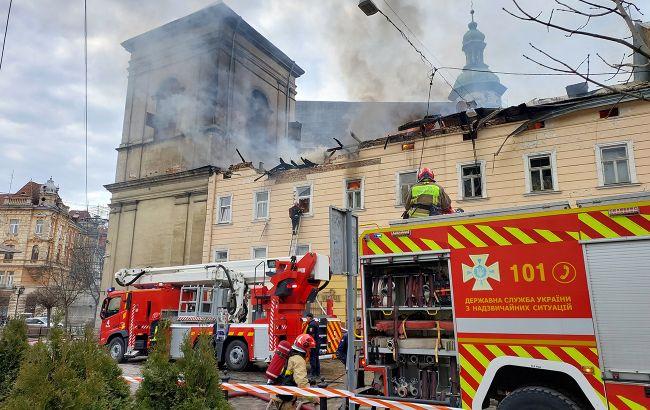
On March 24, Russia launched one of the largest drone attacks since the start of its full-scale invasion of Ukraine. According to the Ukrainian Air Force, over 400 strike drones crossed into the country’s airspace within just a few hours.
The strikes hit cities from frontline regions to the far west of the country. Once again, it became painfully clear: there are no truly safe places left in Ukraine. For journalists, the sounds of drone attacks and explosions have become part of their everyday working environment.
No Safe Haven: Western Ukraine Under Attack
In the public imagination—both abroad and within Ukraine—Lviv has long been associated with relative safety. But today, Ukraine faces a new geography of threat. Large-scale attacks are no longer confined to the front line.
On March 24, the myth of a “safe Lviv” was shattered once again: a Russian drone exploded in the city’s historic center, just meters from the office of a local TV and radio company.
“The Shahed drone hit very close to the premises of the Pershyi Zakhidnyi TV channel—literally 100 meters away. At that moment, we and the journalists were following the two-wall rule, sheltering in the corridor,” said Svitlana Rovenchak, head of the channel’s news programming department, in a comment to the NUJU.
Despite the immediate danger, the team did not stop. They filmed the aftermath, prepared live broadcasts, and edited reports.

“First, we take photos and videos for social media; then we can do live streams from the impact sites or from briefing summaries. After that come live standups and footage for full reports. This allows us to deliver multifaceted coverage. We’re talking about seconds-long videos that create a sense of presence and allow our viewers to follow the situation almost in real time. These videos generate an extraordinary number of views. And then there are the wrap-up reports for those who want to know more, in depth, rather than fast and at a glance,” Rovenchak shared.
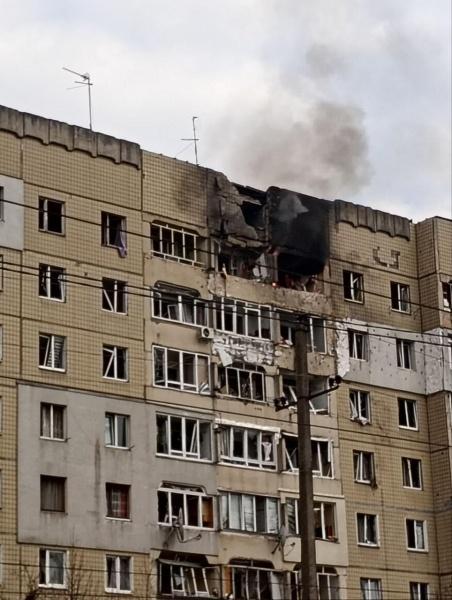
Local newsrooms have long developed their own survival protocols: stay away from debris, avoid sensitive sites, and coordinate with rescue services.
“When an enemy drone hit a residential building on Chervonoi Kalyny Avenue, we, as a hyperlocal media outlet, immediately mobilized to cover this act of aggression. At the same time, over these years of full-scale war, we have clearly established our main editorial rule: to prioritize the safety of our journalists working on the ground. We published posts, videos, and news from the scene, but we also listened to the advice and instructions of law enforcement and rescue workers,” emphasized Khrystyna Hohol, editor-in-chief of Sykhiv.Media, in a comment to the NUJU.
On the same day, drones struck the center of Ivano-Frankivsk. Two people were killed, and residential buildings and medical facilities were damaged.
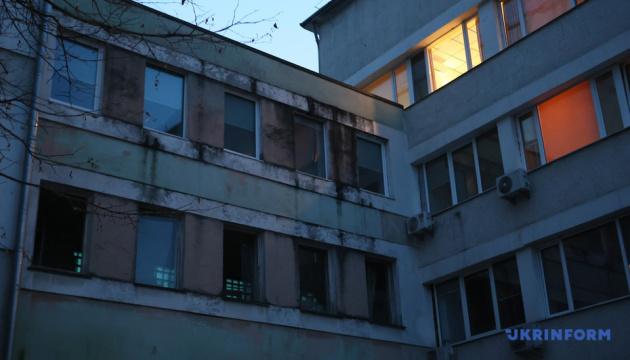
“This was the first time an attack like this happened in downtown Ivano-Frankivsk. The impact site was just a five-minute walk from our Journalism Solidarity Center office. We were not harmed, but our journalists heard and saw it—how it flew in and how it hit,” said Viktoriia Plakhta, coordinator of the Ivano-Frankivsk Journalism Solidarity Center of the National Union of Journalists of Ukraine (NUJU).
According to her, media workers responded immediately: as soon as the official clearance was given, they were at the scene—interviewing witnesses, gathering expert commentary, and documenting the consequences.
Shattered Homes, Personal Losses — and Unbroken Spirit
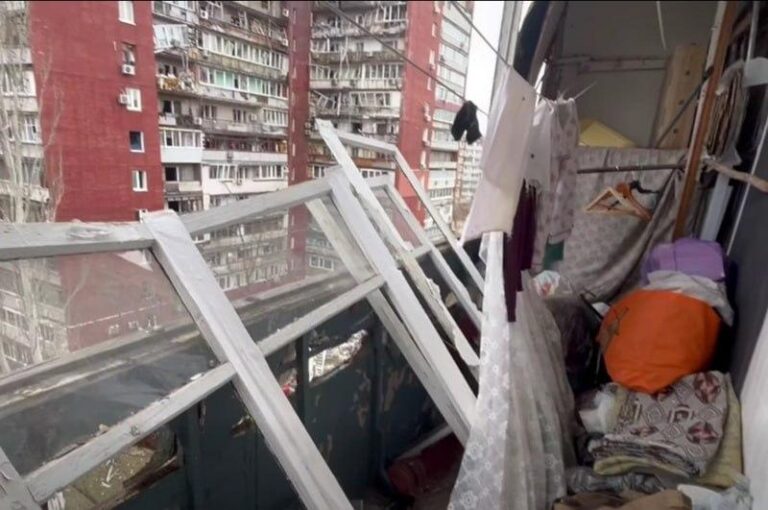
In Dnipro, a drone struck a residential high-rise. The blast wave damaged neighboring apartments—including the homes of journalists.
The apartment of Oleksiy Kovalchuk, head of the Dnipropetrovsk regional branch of the NUJU, was hit, along with the home of his wife’s parents. His wife, Nataliia Kovalchuk, is editor-in-chief of the newspaper Visti Prydniprovia. At the time of the strike, a displaced family from Pokrovsk was living in the apartment. Fortunately, no one was home.
“We’ve done temporary repairs to make the apartment livable—cleaned up, sealed the cracks, and covered the blown-out windows,” Kovalchuk told the NUJU. “Now we’re working on replacing the window units. This has seriously affected our work—dealing with the aftermath takes time away from urgent tasks like preparing the newspaper, coordinating with colleagues, and handling logistics. It took a lot of time, but thank God we’ve all learned by now and reacted quickly. Psychologically, it really knocks you off track, but a person adapts to everything—even to events like this.”
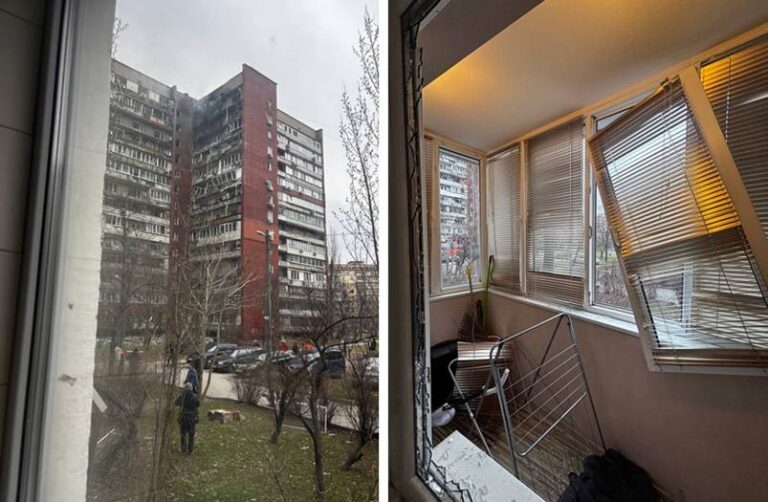
Another Dnipro journalist, Nataliia Moskalenko, documented the scale of destruction in her own apartment: “The blast wave was extraordinarily powerful. Our apartment on the seventh floor was among the most severely damaged: blown-out windows, destroyed frames, glass everywhere.”
The strikes on journalists’ homes in Dnipro are not the first alarming signal. On the night of November 16, 2025, a Russian drone damaged the NUJU’s office in the city. Two days later, on the night of November 18, the newsroom of Suspilne Dnipro (the public broadcaster’s regional branch) was hit. Both incidents are evidence that media infrastructure is being deliberately targeted. On March 24, 2026, this pattern was confirmed once again.
In Zaporizhzhia, the strike had even more fatal consequences.
“Today, Russians hit my apartment. The young man who was renting it has been killed. His girlfriend is in the hospital,” wrote Artem Lahutenko, a former journalist who now serves in the Ukrainian military.
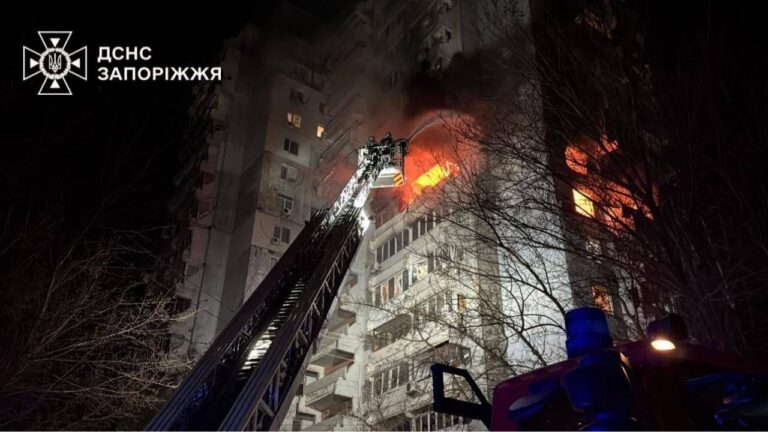
His words are a painful testament to the fact that the lines between “civilian” and “dangerous,” between “journalist” and “victim,” have been erased entirely in today’s Ukraine. But Zaporizhzhia also demonstrates something else—something that captures the essence of Ukrainian journalism.
Natalia Kuzmenko, coordinator of the Zaporizhzhia Journalists’ Solidarity Center, describes what the morning after the nighttime attacks looked like: “Despite the stormy night and morning Shahed attacks, during a lull between strikes, journalists gathered for a training session on the new Media Law. They hadn’t slept, but they showed up and did the work.”
Seven strikes in one night—and the next morning, people sit down to study. Not because they are not afraid. But because the work will not wait.
Kharkiv: Where Drone Attacks Have Long Become Routine
If the March 24 attack was a first for central Ivano-Frankivsk, for Kharkiv it has long been a grim reality. The city in northeastern Ukraine has been under bombardment for years, and journalists here have learned to work under conditions that elsewhere would be considered an emergency.
The Kharkiv Journalists’ Solidarity Center has repeatedly found itself in the danger zone. The most recent strikes nearby occurred in mid-January and early March—at distances of 1.5 and 5 kilometers from the building. Neither the structure nor the team were harmed. But a few kilometers is not a distance that offers comfort.
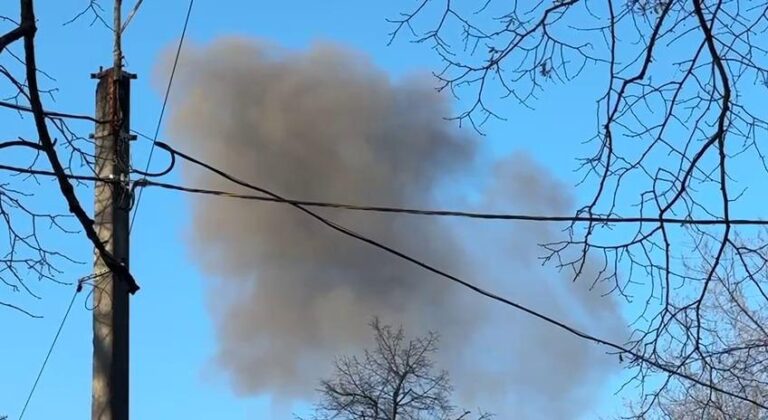
Hanna Chernenko, coordinator of the Kharkiv Center, articulates the broader context of what is happening across the country: “When Russia attacks Lviv, Ivano-Frankivsk, Vinnytsia—cities we all consider at least conditionally safe—many people feel fear again. Fear that there is no safety after all. Fear that the war is not limited to certain territories. This, too, is one of the tactics of the terrorist state—to exert emotional pressure.”
Kharkiv’s journalists continue to work—despite the constant danger, despite the exhaustion, despite the fact that every time they go out to film, it could be their last.
Solidarity as Infrastructure: How Ukraine’s Journalist Support Network Keeps the Press Alive
In these conditions, journalism endures not on skill and courage alone, but also through support systems.
The network of Journalists’ Solidarity Centers (JSCs) operated by the NUJU has become exactly that kind of system. In Lviv, the Center provides journalists with protective equipment—helmets and body armor. In Zaporizhzhia—a city where seven strikes in a single night no longer surprise anyone—the Center is located in the very heart of the city and serves as an operational hub.
“Journalists and camera operators come in to quickly file reports to their websites or urgently transfer materials. Equipment and tools for work are available,” says Natalia Kuzmenko, coordinator of the Zaporizhzhia JSC.

“Journalists must always remember their own safety, especially when the enemy strikes targets in the very center of the city,” says her colleague at the Lviv JSC, Nataliia Voitovych. “We repeatedly emphasize that taking care of your own protection is a priority. The Journalists’ Solidarity Center in Lviv is always ready to help. In such cases, or during assignments to combat zones, we provide media workers with the necessary protective equipment so they can do their jobs professionally and safely.”
Hanna Chernenko from Kharkiv points to another dimension of the Centers’ work—the social one: “In conditions of years-long displacement from their cities and newsrooms, the JSC network has become a vital communication community for forcibly displaced media workers.” Hundreds of colleagues have evacuated to Lviv and Ivano-Frankivsk, and it is in the Centers that they find both workspace and human support.
In addition to protective equipment, JSCs across the country provide emergency assistance after attacks, workspaces for displaced journalists, psychological support, and safety training.
“All journalists whose property was damaged as a result of the Russian attack on March 24, as well as those affected by previous attacks, will receive emergency financial assistance from the NUJU,” emphasized Nataliia Nazarova, coordinator of the NUJU’s Journalism Solidarity Center in Dnipro.
Russia’s Strategy: Silencing the Witnesses to War Crimes
“The events of March 24 are not an isolated episode,” says NUJU President Sergiy Tomilenko. “This is part of Russia’s systemic strategy: to destroy not just people and buildings, but the very ability of society to document what is happening. When journalists are killed or silenced, war crimes become invisible. Ukrainian media workers today are doing work that matters far beyond Ukraine’s borders: they are preserving the evidentiary record, maintaining the link between the front lines and the world, and preventing the war from becoming an abstraction in international news.”
But to continue this work, they need support—protective equipment, psychological assistance, safe workspaces. This is exactly what the NUJU’s network of Journalists’ Solidarity Centers provides. This is why its existence is not an internal matter of one organization, but a concern for everyone who cares about press freedom.
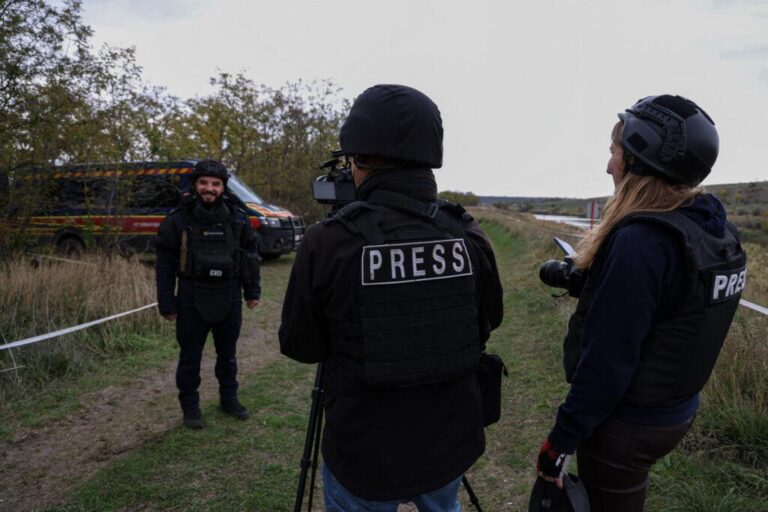
Despite everything, Ukrainian journalists remain at their posts. Because in times of war, journalism is not just important. It is a lifeline.
The Human Cost: A Tragic Toll
As of March 25, 2026, since the start of Russia’s full-scale invasion of Ukraine, the occupiers have killed at least 145 media workers. According to verified data from the NUJU and the International Federation of Journalists (IFJ):
- 21 media workers were killed while carrying out professional duties;
- 10 media workers were killed as civilian victims;
- 114 media professionals were killed while mobilized to defend Ukraine in the ranks of the Defense Forces.
NUJU Information Service














Discussion about this post