 THE NATIONAL UNION OF
JOURNALISTS OF UKRAINE
THE NATIONAL UNION OF
JOURNALISTS OF UKRAINE
The international press freedom organization Reporters Without Borders (RSF) has been monitoring the persecution of journalists on the occupied Crimean peninsula since 2014.
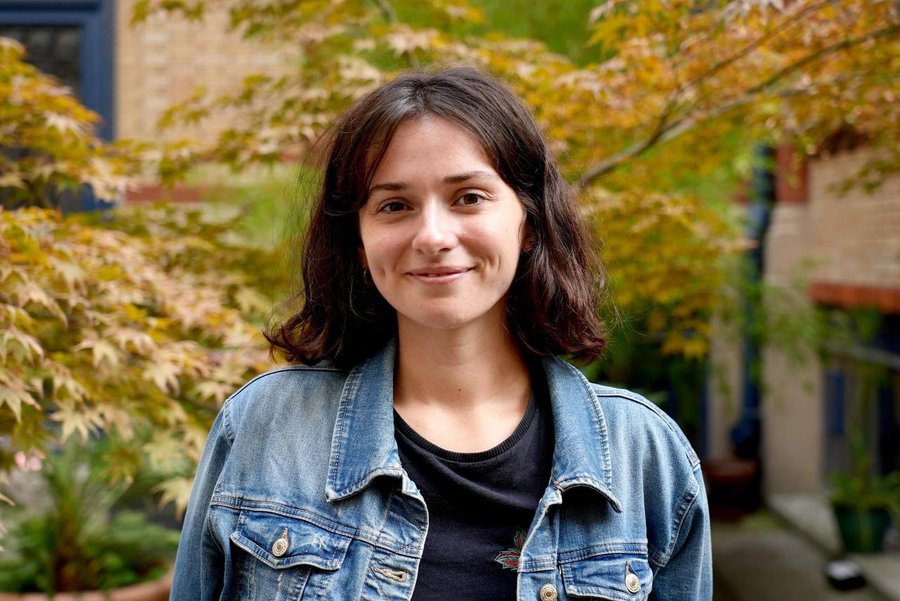
Pauline Maufrais, the organization’s regional manager for Ukraine, told Suspilne.Krym about how russia has been destroying independent journalism in the region, why the release of imprisoned journalists is so difficult, and how RSF is seeking justice.
According to Pauline Maufrais, 88% of Ukrainian media outlets that were active before the occupation ceased to exist in 2015. Independent journalists have become the main targets of the occupation forces, and Crimea has turned into a media desert, where only propaganda is allowed.
RSF has documented 16 cases of Crimean journalists being held in russian prisons. Among them are Oleksii Bessarabov, who was illegally arrested in 2016, and the most recent detainees, Aziz Azizov and Rustem Osmanov, who were arrested in March 2024. All of them are included in the RSF Press Freedom Barometer.
After February 24, 2022, repression intensified. Remzi Bekirov, a journalist for Grani.ru, was sentenced to 19 years in prison on charges of “terrorism.” Iryna Danylovych, a correspondent for InZhir-media and Krym.Realii, was sentenced to seven years on the absurd charge of possessing explosives. The woman is being held in a russian prison without access to medical care, despite her deteriorating health.
Currently, in 2026, russia is detaining 26 (according to the NUJU, at least 28) Ukrainian journalists, who are subjected to physical and psychological violence.
RSF emphasizes that having a press card is not a prerequisite for recognizing a person as a journalist. The organization protects everyone who regularly engages in journalistic activities, adheres to ethical principles, and creates reliable, socially important content. A prime example is Yevhen Ilchenko, arrested in Melitopol for running a Telegram channel where he documented life in the city under occupation.
According to Pauline Maufrais, russia arbitrarily detains journalists in order to suppress independent voices. Therefore, RSF’s demand is unequivocal: the journalists must be released unconditionally, and the fabricated charges must be dropped. Using them as a “bargaining coin” is unacceptable.
To attract the attention of the international community, RSF regularly raises the issue of the fate of imprisoned journalists at the venues of the Parliamentary Assembly of the Council of Europe and other international forums.
The mechanisms of media occupation practiced by russia in Crimea — seizing media outlets, closing independent editorial offices, arresting journalists — have been replicated in all other occupied territories. That is why recording the persecution is critically important: without independent journalism, the entire information space in the region is occupied exclusively by russian propaganda.
As a reminder, last year in the RSF ranking, russia ranked 171st out of 180 on the press freedom index.











Discussion about this post