

 THE NATIONAL UNION OF
JOURNALISTS OF UKRAINE


“When I start to think that I’m having a hard time, I remember the heroine of my publication, who survived hell in Mariupol and was forced to drink water from radiators. Knowing that makes staying without electricity for 10 hours not so scary,” says Aliona Kasatkina, editor of the Sumy-based newspaper, Panorama. She presented the material titled “Life after Mariupol.” How a Displaced Person Found Her Place in Sumy during a mentoring session as part of the National Union of Journalists of Ukraine’s (NUJU) training course called Strengthening the Resilience of Frontline Media. Journalist Yuliya Surkova dedicated the fourth mentoring session to the participants’ materials – an analysis of already written ones and advice on future publications.
The focus is on the stories of people, as well as cities and places, and their changes under the influence of the great war.
The heroine of Aliona Kasatkina‘s publication was able to take her son and mother out of Mariupol. She now has her own business in Sumy.
“A dream about a joint report from the Left-Bank Kherson Region” is the title of the material prepared by Liubov Rudia, the editor of the Silski Novyny newspaper from the Kherson Region. It is about journalist Olena Hnitetska, who was a volunteer in occupied Kherson and filmed a report from the “parade” on May 9, 2022, thanks to which many collaborators were identified. And now she works on the frontline in Kherson, prepares materials about her region, and dreams of preparing a joint report on the liberated Left-Bank Kherson Region with the author of the publication.
“Their story is not only about seedlings, but also about how, amidst ruins and anxieties, one can preserve the main thing – the ability to create life and bear fruit,” is an excerpt from Olena Tiaglenko‘s article The Second Year of the Indestructibility of the Voskov Family in the Vorskla newspaper. It is about a couple who, despite forced relocations, continue to engage in their life’s work – growing seedlings.
Pay attention to the details of appearance, provide more facts and fewer generalizations, pay attention to illustrations, and do not forget to indicate past publications about their heroes, using hyperlinks, which were drawn to the attention of the participants by Yuliya Surkova.
In addition, she prepared tips for the course participants on communicating with live sources. Here are the main ones.
Introduce yourself as a journalist
Communication with a source of information begins precisely with the journalist and their presentation. A journalist should not hide their profession; otherwise, they will simply steal information.
Suppose a source understands what they are talking about to a journalist. In that case, they also understand the responsibility for what they are saying. This means that people will not exaggerate some facts or retract their words after publication.
Suppose you are working directly in the field, at a rally or event. In that case, it is better to wear your ID around your neck in a transparent plastic badge so people can immediately see who you are.
Be polite and friendly to sources. The main thing is to engage in a dialogue.
After you have introduced yourself, ask how you can contact the person. At the beginning, the main task is to engage the person in a dialogue. You should not immediately pounce on the person with questions. Take the time to explain why you are here, what kind of story you are shooting, and why it is important for you to get answers.
Have accounts that represent you as a professional.
If you communicate with a source on social networks or messengers, use accounts that clearly show your name, where you work, and what you look like. It is better to use a photo where your face is visible. Profiles without photos and nicknames will not inspire trust and will be viewed suspiciously. It is better to have work and personal pages. Work pages should be businesslike and open.
Respect the source’s personal time. Discuss in advance when it will be convenient for him to communicate.
No one should answer you right here and right now. If the topic is very urgent, emphasize this, but you cannot demand that the person talk to you right away.
If you are calling the person for the first time, apologize.
The person may not answer you, because you are calling from an unfamiliar number to him. In this case, write him an SMS and explain who you are and why you are calling.
Explain where you got the source’s contacts.
Referring to colleagues or mutual acquaintances will increase your credibility. If you find this contact yourself, you can also write about the fact that you spent a lot of time searching for this particular expert, which will emphasize your involvement.
Prepare for communication before it begins. Learn about the expert and his background.
Before writing or calling the expert, please find out their position and area of expertise by simply Googling the topics they comment on.


Rules for communicating with live sources. Interviews as a genre and as a tool for collecting information:
- Assess the situation and the place of the event.
- Use simple questions to collect information.
- Don’t be afraid to repeat the same question several times.
- Ask in chronological order, recreate events – this will give you a more complete picture.
- Ask the person to recall details, colors, and atmosphere. This will give your reader the effect of presence.
- Don’t be afraid to seem stupid if the hero uses complex terms. Ask for explanations.
- Avoid stereotyped and incorrect questions like “What did you feel at that moment?”
- Make notes and check them.
- Keep in touch and do not hesitate to call back (while writing the material, you may have new questions).
- Do not let yourself be deceived. Check for high-profile, blatant facts voiced by sources.
During the course, Yuliya Surkova drew attention to the fact that their daily work is also worth preparing materials about. However, the colleagues themselves believe that there is nothing extraordinary in this.
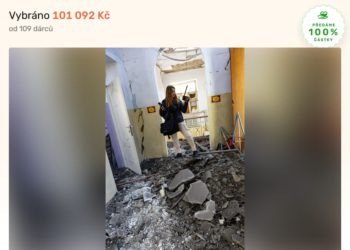
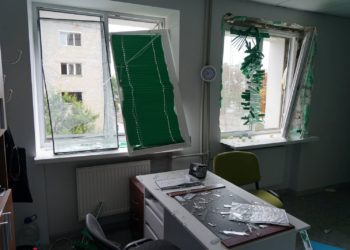
One of the participants connected via Starlink from the Sumy landing, and another barely caught the connection after the guided bomb fell 300 meters from his house on the border. Colleagues from the Zaporizhzhia Region are connecting from newsrooms damaged by shelling. And absolutely all of them are in a critical funding situation.
“At the same time, they study, deliver newspapers, publish materials about life under occupation, wounded soldiers, and endless shelling. And sometimes they also work part-time to have money to publish the newspaper,” said Yuliya Surkova.
The project is funded by the Embassy of the Republic of Lithuania in Ukraine within the framework of the Development Cooperation and Democracy Promotion Programme.













Discussion about this post