 THE NATIONAL UNION OF
JOURNALISTS OF UKRAINE
THE NATIONAL UNION OF
JOURNALISTS OF UKRAINE
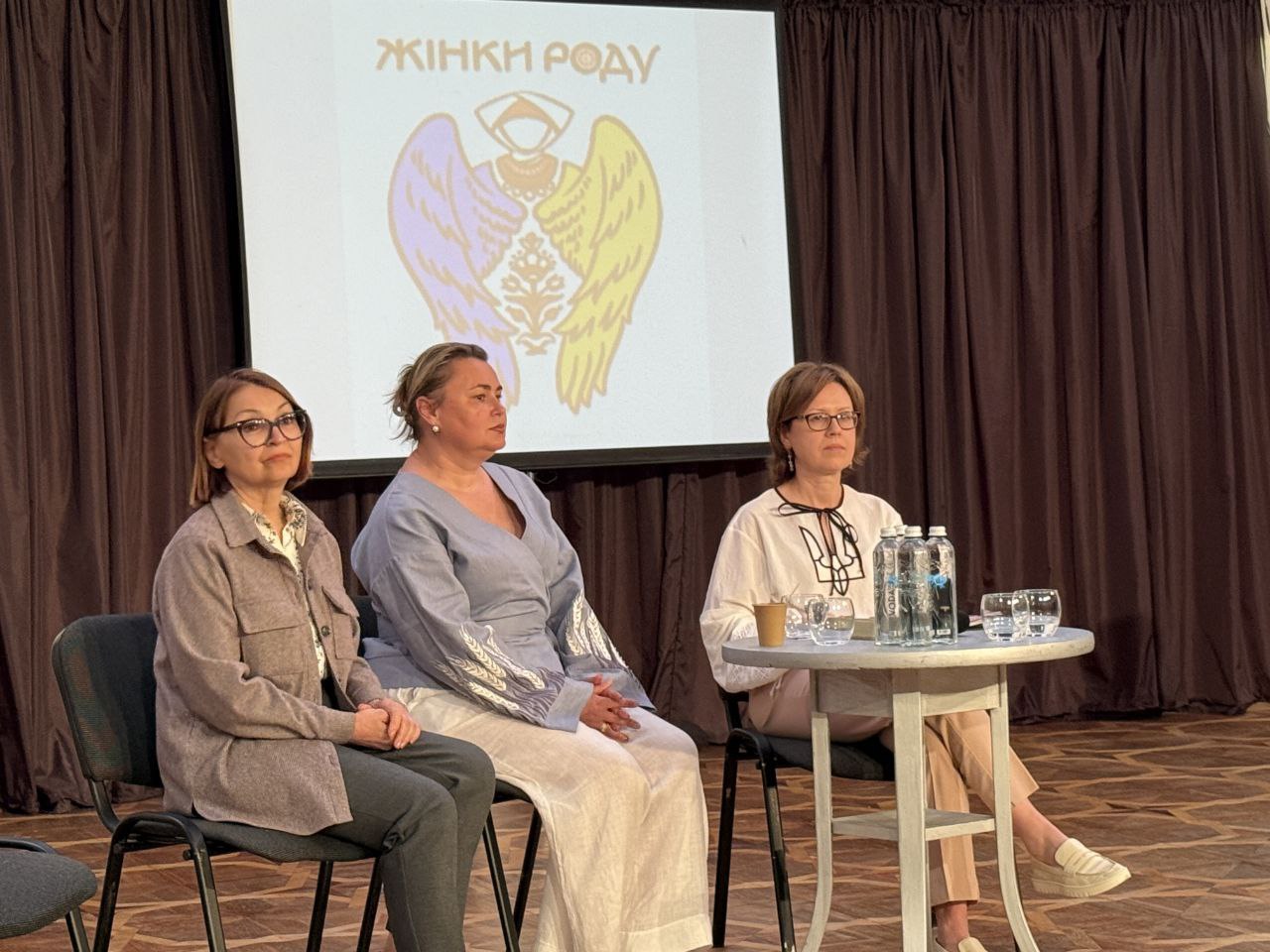
What can journalists and the media do to help the families of prisoners of war and missing persons? How to talk about civilian prisoners – without harm, making it useful? The participants of the panel discussion called We Write About Those Who Cannot Speak. We Fight for All, which took place in Kyiv on the occasion of World Press Freedom Day, sought answers to the aforementioned questions. The event was organized by the Zhinky Rodu non-governmental organization with the support of the Territorial Defense Command of the Armed Forces of Ukraine (AFU) and in cooperation with the National Union of Journalists of Ukraine (NUJU).
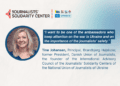
According to Iryna Vereshchuk, the Deputy Head of the Presidential Office, currently, more than 63,000 people are considered missing in Ukraine, and about 10,000 have confirmation of being in captivity. Almost 30 Ukrainian journalists are also in russian captivity. But behind each figure is a specific person who needs support. And it is journalists who know how to document and report stories who become the channel through which the world learns about captives. At the same time, this work requires caution – so as not to harm those who are in captivity.
“We understand all this perfectly well and thank you very much for the patience of the families. That you do not succumb to russian pressure, everything that Ukraine should have done, we did,” emphasized Iryna Vereshchuk.
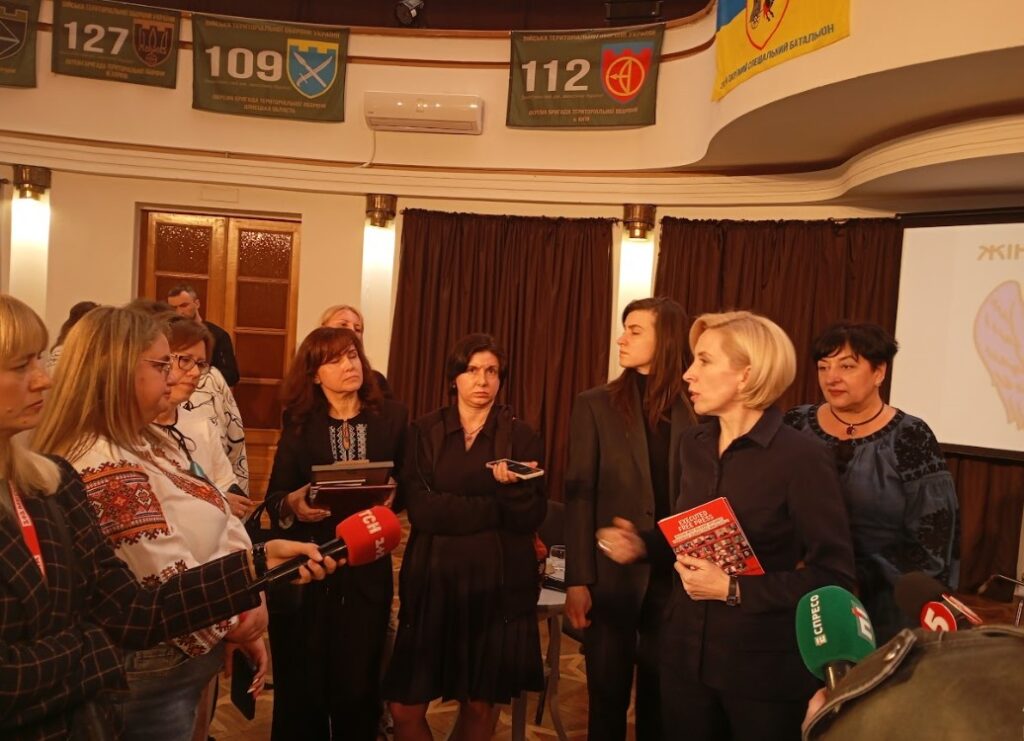
The main goal of the panel discussion was to remind that we need to talk about civilians in captivity. Constantly. At all levels. So that they return. And so that those who tortured them answer.
The participants in the discussion shared their thoughts.
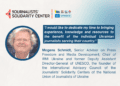
“The NUJU is not just a professional community, but also a platform for support for the families of prisoners of war and missing persons,” emphasized the First Secretary of the NUJU/member of the Commission on Journalistic Ethics/member of the board of the Numo, Sestry NGO, Lina Kushch.
“We have repeatedly met with families, documented their stories, and advised media professionals on ethical coverage of the topic. I was personally involved in developing the recommendations of the Commission on Journalistic Ethics on how to report on prisoners of war. It is especially important not to publish personal data that can be used by the aggressor to put pressure on prisoners or their families. We also conduct training sessions – in particular, together with human rights activist Liudmyla Huseinova, we conducted a series of classes for regional journalists on the topic of sexual violence related to the conflict, and in particular – on civilian female prisoners,” Lina Kushch noted.
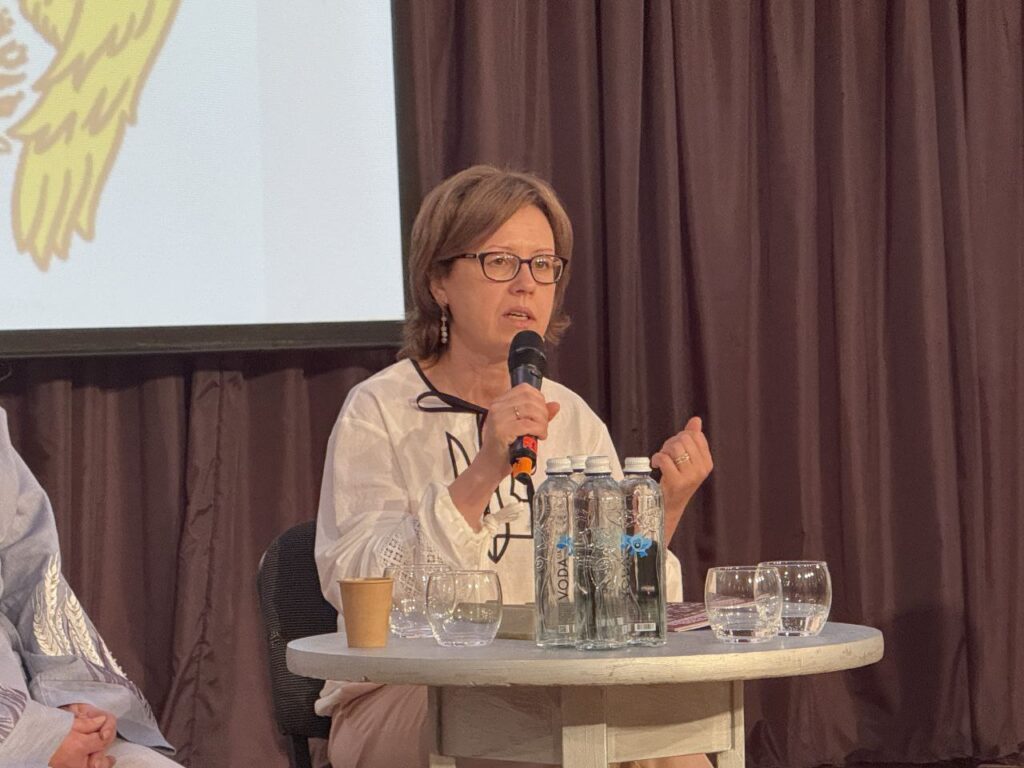
She said that the released prisoners with whom she managed to talk emphasized that they had heard about campaigns in their support. And although it seems that information does not pass through the isolation, it does reach them – and gives strength. This is confirmed by Nariman Dzhelal, Maksym Butkevych, and other released prisoners.
“Previously, we were wary of publicity, believing that silence provides security. But experience proves the opposite – silence only plays into the hands of the aggressor. At the same time, we must be extremely careful – especially in the first weeks after detention. We must not disclose facts that may cause increased pressure on prisoners. We must not report on their beliefs, connections with the military, assistance to the AFU – all this can be used by the enemy,” Lina Kushch drew attention.
Human rights activists constantly emphasize that publicity is important, but it must be balanced. If relatives decide to publish information – on social networks or in the media – they should not indicate the military rank, unit number, or other information that may indicate the strategic importance of the prisoner. It is also worth being careful with contacts. There are known cases when families were called by scammers or representatives of the enemy. This was emphasized by the coordinator of family groups of the Media Initiative for Human Rights NGO, Olena Bieliachkova.
According to her, the Ukrainian military currently has no preparation for captivity as such. russia, on the other hand, is carrying out targeted psychological and physical pressure, demanding “confessions” in fabricated crimes. It is very important that our military are informed about how to act in such a situation. And that the state speaks clearly: no one will be punished for the testimonies that were given under torture.
“Ukraine is doing everything to return prisoners. At the same time, the russians tell both the military and civilians that Ukraine doesn’t need you and that Ukraine doesn’t want to take you. It also happens that they organize the removal of guys for the so-called pseudo-exchange, take them somewhere, and then say that, you see, they didn’t come for you. It is important to talk about this so that those who are currently coming to serve understand what can happen. But this needs to be explained properly,” said Olena Bieliachkova.
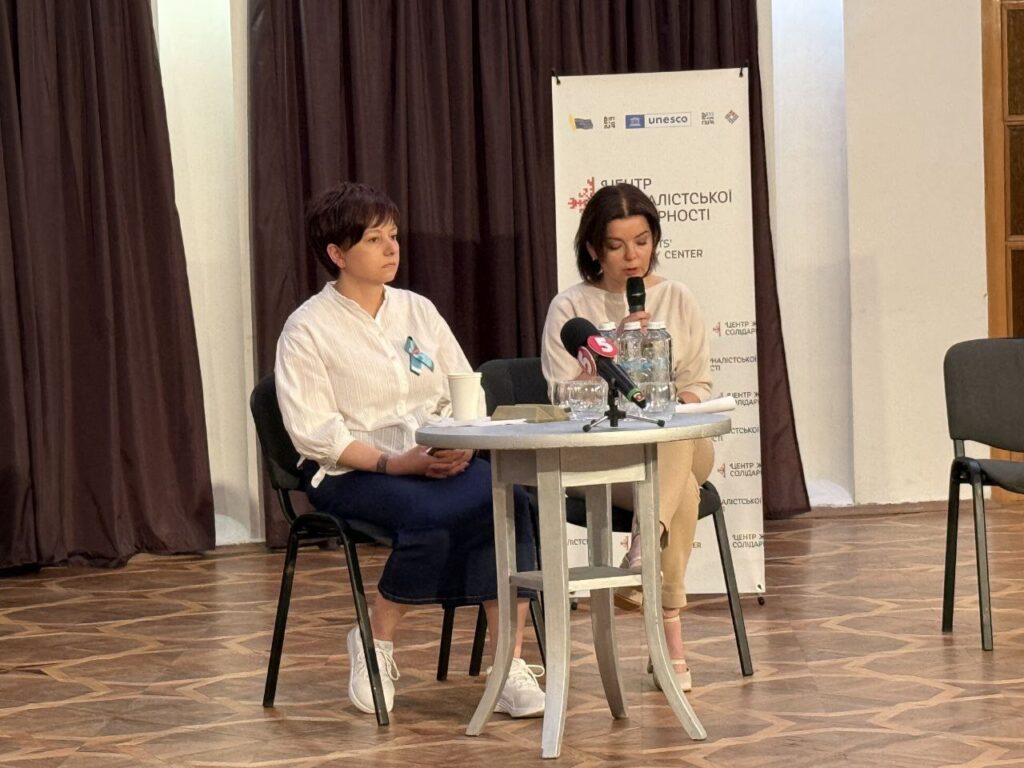
It is also necessary to establish state communication with those who remained in the temporarily occupied territories. Because these people – the relatives of the prisoners – also have the right to support and know where to turn.
“My husband Serhii was kidnapped in the first days of the occupation of Nova Kakhovka – just for the fact that he spoke publicly about what was happening in the city. Since the beginning of the full-scale war, he has become an information defender – and it has cost him his freedom. I have been fighting for his release since the first days. Having moved to Kyiv, I was able to find like-minded people, journalists, human rights activists, and lawyers. It was thanks to an active information campaign that I managed to get confirmation that Serhii was alive. And it started with participation in an advocacy tour to the OSCE,” noted Olena Tsyhipa, the wife of the captured journalist Serhii Tsyhipa.
Civilian families have a very difficult time. They do not have the same legal protection as military ones. But they are fighting, and they really need informational support. Letters to international organizations, speeches at European institutions, even actions with photos of our relatives – all this works and helps.
Olena Tsyhipa also drew attention to the difference in the attitude toward Ukrainian prisoners of war in russia and towards russian prisoners of war in Ukraine.
“We know that our authorities are very careful to ensure that all the norms of the Geneva Convention are observed with regard to russian prisoners of war, that they are properly fed, and that they have feedback from their relatives. We also ask the international community to treat our prisoners of war the same way we treated russian prisoners of war and prisoners of war. This is very important because, during each exchange, we see in what condition our guys return. And we need to ensure that the russian side understands that if they participate in torture and abuse, they will be held accountable for it.”
Liudmyla Huseinova, a human rights activist and head of the Numo, Sestry! NGO knows firsthand what russian captivity is like. She spent three years behind enemy lines.
“I was tortured, abused physically and psychologically. And I know for sure – when the campaign in my support began, the physical pressure decreased. Yes, the psychological pressure remained. But the main thing is that I knew that they remembered me. Therefore, we need to talk about prisoners of war. Especially civilians,” emphasizes Liudmyla.
She draws attention to the fact that regarding the military, campaigns are ongoing, and there are corresponding platforms headquarters. Civilians do not have this. Families who remained in the occupied territories often have nowhere to turn to. The Numo, Sestry! NGO receives many appeals, but they do not always know what to answer.
“The state must also communicate with people who remained in the temporarily occupied territory. And I was very sad to hear when they said that the strategic plans provide for the purchase of clothes only for released prisoners of war. This is a small amount of help, but for civilians, there is not even that. Released civilian prisoners survive mainly thanks to friends, and this should be paid attention to. There is also an association of civilian prisoners, and we are also ready to participate in all processes,” emphasized Liudmyla.
She noted that in our state, support tools should be created for all prisoners, regardless of status. After all, these are not just numbers – these are women, men, mothers, fathers, journalists. Publicity is the path to liberation.
NUJU Information Service





Discussion about this post