
 THE NATIONAL UNION OF
JOURNALISTS OF UKRAINE
THE NATIONAL UNION OF
JOURNALISTS OF UKRAINE
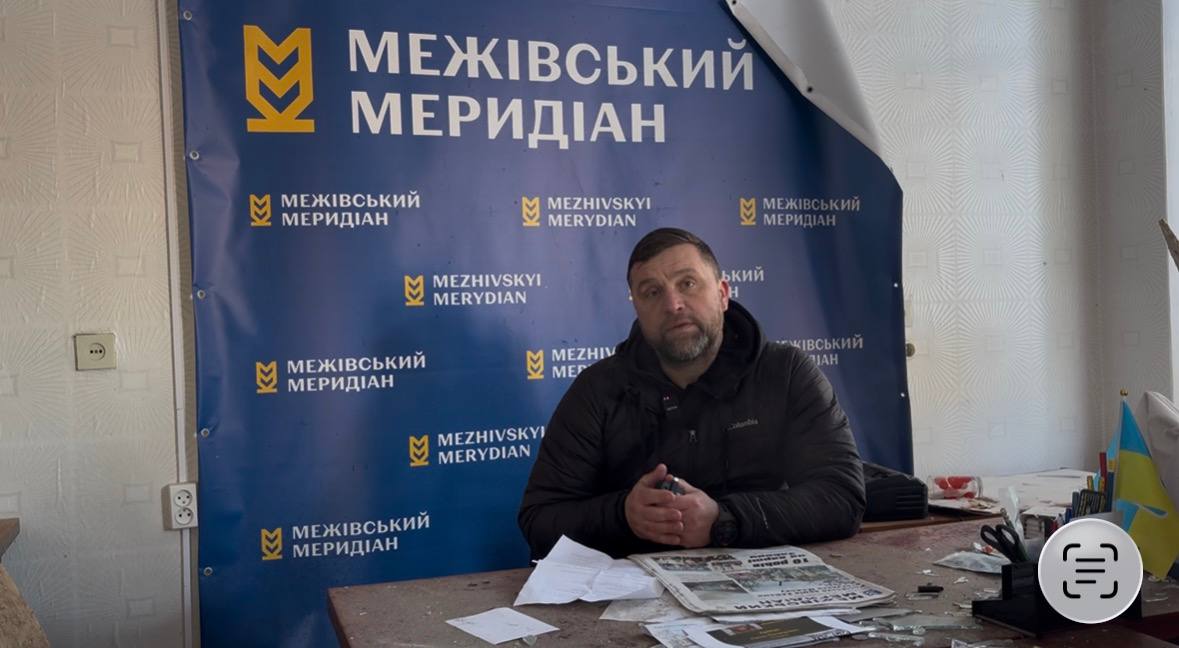
“The newspaper’s newsroom was destroyed by a drone, and then by a guided air bomb. But we publish the newspaper. We deliver it ourselves to the villages, where we will reach under shelling,” says Yevhen Khrypun, the editor-in-chief of the newspaper Mezhivskyi Merydian.
Today, the front is only a few kilometers away from the village of Mezhova. 2025 has become the most difficult year in the newspaper’s history. Drones, cabs, a destroyed newsroom, evacuation of the population, and at the same time, 45 issues were published, printing and delivery of the circulation to the frontline territory.
In this video, how local media survive during the war, how a small newsroom works in relocation, and why it is important to preserve independent journalism for communities near the front. This is a story about responsibility, people, and truth under fire.
Yevhen Khrypun visits Mezhova with another issue of the newspaper – 12 pages, color printing. Ukrposhta has not been coming here for several months, so we have to deliver it ourselves.
“All last year we did everything possible to stay with our readers,” says Yevhen. “Some read us online, especially in the fall, when Mezhova began to be attacked by drones, and then by guided bombs. And some without the Internet could only read the printed version. We tried to deliver the newspaper to everyone. Unfortunately, we cannot reach everywhere – somewhere it is dangerous, somewhere it is simply physically impossible. And we would like to reach everyone.”
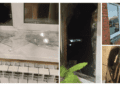
In May, Mezhyvskyi Meridian turned 95, and the anniversary was celebrated under shelling. The Molniya hit the editor’s office, then the cab smashed into the neighboring building – a former printing house. The blast wave tore off the roof, knocking out windows and doors. The population is being evacuated, but the newsroom is working. Four people are running the publication: journalist Snezhana Salivon, accountant Valentyna Ostapchuk, designer Nataliya Vozniuk (a member of the NUJU), and Yevhen Khrypun himself. Student journalists from Dnipro even come to them for internships – despite everything.”
“The most important thing now is not to lose this team, because we have no right to leave our audience. People trust us and are waiting for us,” says the editor-in-chief. “The subscription included a circulation of almost 1,500 copies – for a frontline zone, this is a serious figure. We made commitments to readers and fulfilled them as best we could.”
The newspaper has articles about evacuation, destruction, and life under fire. There is a story about a powerlifting section working in relocation, about fellow countrymen volunteers, the community budget, and advice for those leaving.
“The closer the front, the more materials about war crimes and security. This is our reality,” explains Khrypun.
The newsroom is currently in relocation, subscriptions had to be stopped – this was the main source of income.
“Taking money when you can’t guarantee delivery is dishonest. It’s illogical,” says Yevhen. “The focus is now on digital platforms: on Facebook, 25,000 subscribers and 6 million views per month, the site is visited by 40,000 people, on YouTube – over 250 videos, a telegram has been launched. We are read by fellow countrymen who evacuated, and not only is the news from the front interesting to all of Ukraine.”
Plans for the new year are simple and at the same time complex: “To hold on. To continue to bring people truthful information about what is happening here, in the east of the Dnipropetrovsk region. We have no right to disappear,” says Yevhen Khrypun.
The publication has been awarded certificates by the Verkhovna Rada and the NUJU, and the journalists are winners of competitions under the auspices of the Union. But the main award is the trust of readers, which cannot be bought or obtained by decree. It can only be earned through daily work, even under fire.
NUJU Information Service












Discussion about this post