

 THE NATIONAL UNION OF
JOURNALISTS OF UKRAINE
THE NATIONAL UNION OF
JOURNALISTS OF UKRAINE
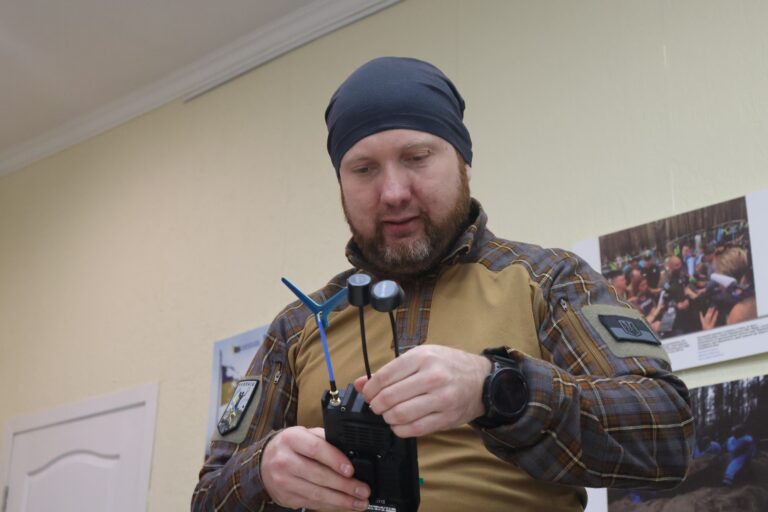
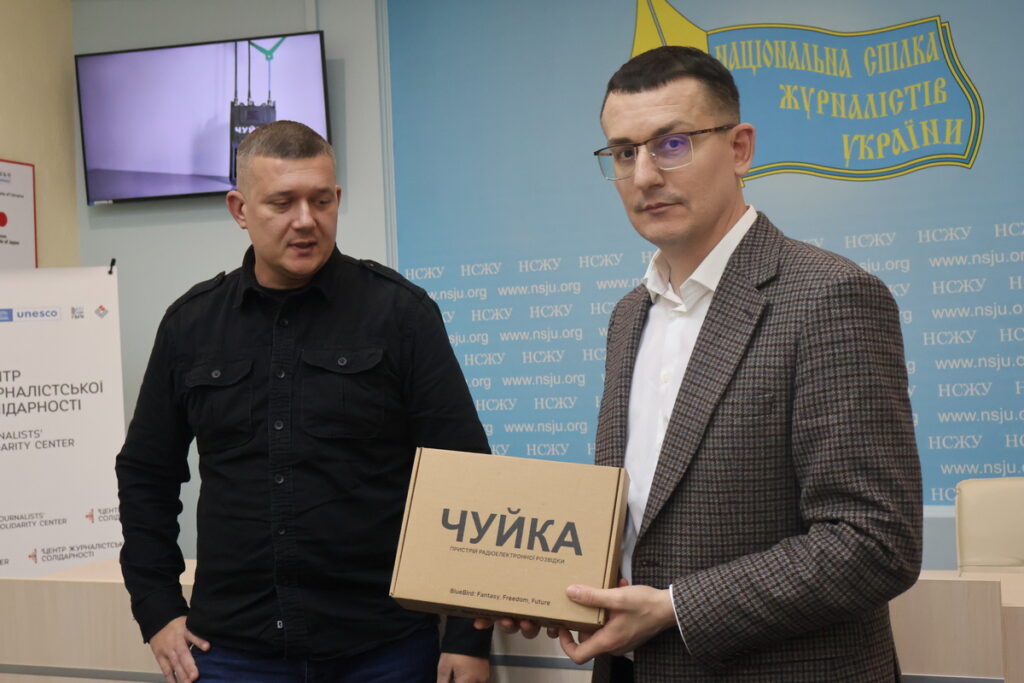
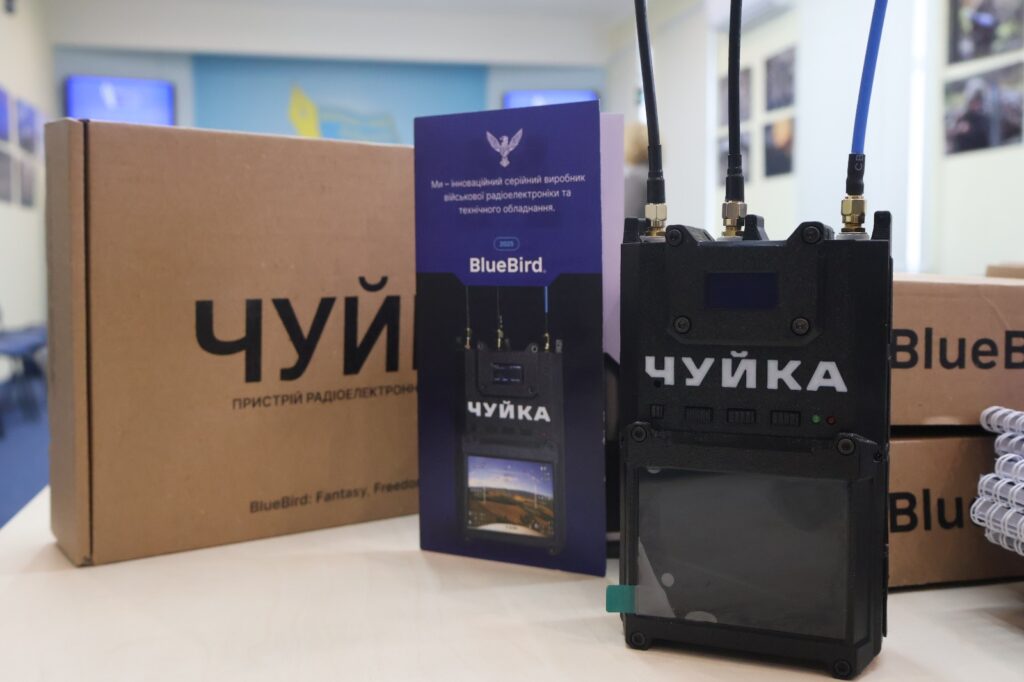
The sharp increase in drone attacks in frontline areas creates a new, even more dangerous reality for journalists. In response to the escalation of threats from the air, war correspondents were given five Chuika 3.0 drone detectors – as part of a joint initiative of the National Union of Journalists of Ukraine (NUJU) and the Ukrainian manufacturer BlueBird Tech, which provided equipment to protect media workers free of charge.
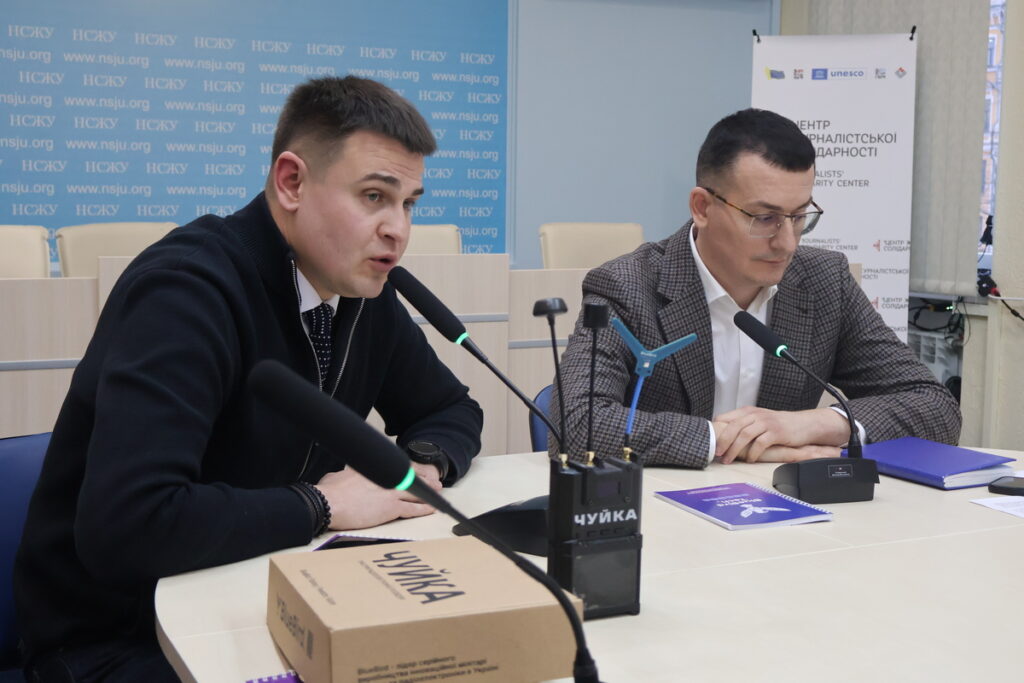
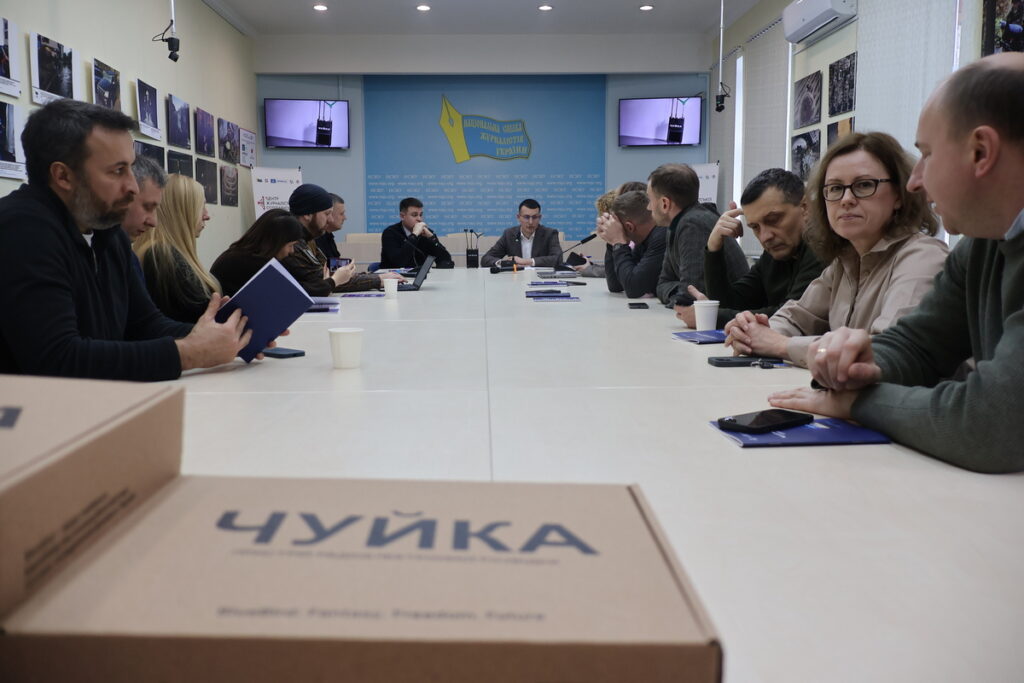
The handover took place during the expert discussion Threat from the Sky: Drone Danger for Journalists and New Protection Tools, organized by the NUJU, and became a practical response to a new phase of risks faced by journalists in the combat zone.
“We are recording a rapid increase in russian attacks using drones, and journalists are increasingly becoming direct targets. In this situation, it is critically important to constantly update safety protocols for work on the front lines. Protective equipment, training, and the ability to quickly adapt to new threats are a matter of saving the lives of war correspondents,” says NUJU President Sergiy Tomilenko.
“The transfer of Chuika detectors from BlueBird Tech to military correspondents is our contribution to the safety of those who hold the information front. FPV drones have become one of the biggest threats in war. We want every journalistic trip to the combat zone to end with the safe return of the entire film crew home,” emphasizes BlueBird Tech co-founder Valerii Zarubin.
Who received the detectors?
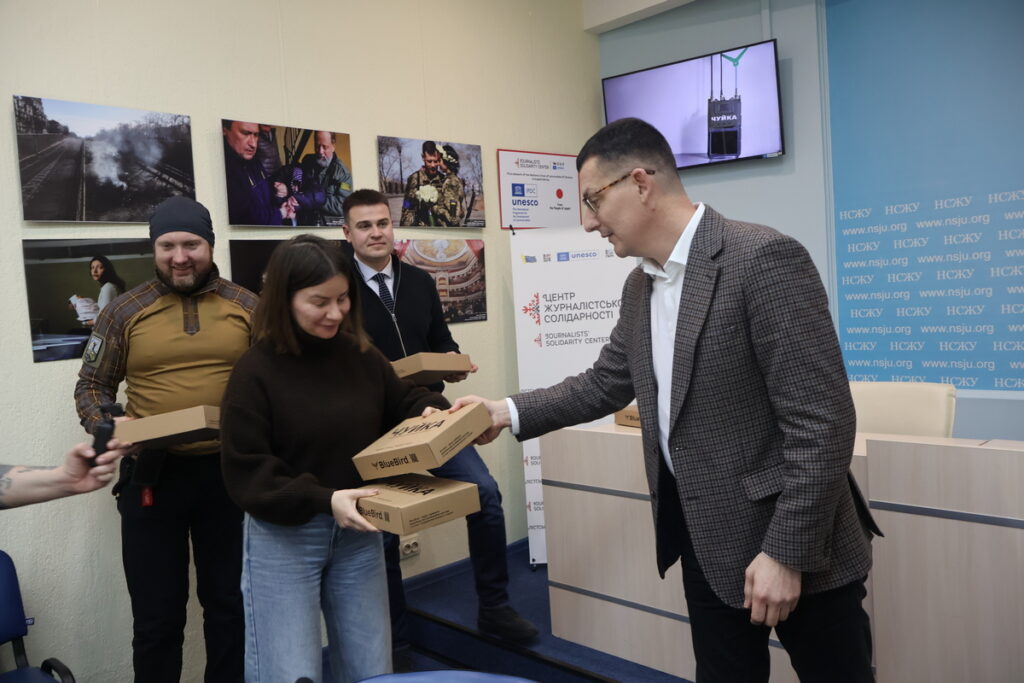
Three detectors were received by war correspondents who work in high-risk areas every day.
Among them is Volodymyr Pavlov, a journalist, fixer for Reuters and Novyny 24 Channel, who systematically works in the Kharkiv, Sumy, and Donetsk Regions. In September, while working in the Donetsk Region, he had to escape from stalking drones twice. As a fixer for international media, he accompanies foreign journalists so that the detector will contribute to the safety of both Ukrainian and foreign colleagues.

The second device was given to Andrii Kovalenko, an international journalist, executive director of the Academy of the Ukrainian Press, and a local producer for foreign newsrooms. Since the beginning of the full-scale invasion, he has been working with leading international media, including Süddeutsche Zeitung, Helsingin Sanomat, CNN Portugal, RTS Swiss TV, RAI, and specializes in working directly near the front line.
The third detector was given to Vasyl Myroshnyk, the editor of the frontline newspaper Zoria (Zolochiv, Kharkiv Region), who works less than 20 km from the border with russia. Recently, one of the villages in his community was subjected to a massive attack by more than 30 drones. The Daily Mail, Radio Liberty, and French public broadcasting reported on the journalist’s work in conditions of constant danger.
Rotational access through JSCs
Two detectors were transferred to NUJU’s Journalists’ Solidarity Centers (JSC) in Kharkiv and Zaporizhzhia for free rotational use by journalists traveling to high-risk areas for filming.
In Kharkiv, the equipment was transferred to JSC coordinator Hanna Chernenko. In the last month alone, the JSC has been contacted twice by journalists from Germany who planned to work in Donbas. At the same time, several FPV drone attacks were recorded in Kharkiv itself, directly in the city.
In Zaporizhzhia, the detector was transferred to the JSC for rotational use; Military Lieutenant Colonel Dariya Zyrianova, a JSC assistant, will be responsible for working with the equipment. The region remains one of the most dangerous for media work due to the constant drone threat.

Expert discussion
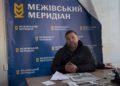
The expert discussion was attended by well-known military journalists and media experts, including Andrii Dubchak (Frontliner), Azad Safarov (Sky News), Director of the Department of Strategic Communications of the Ministry of Culture and Information Policy Hanna Krasnostup, First Secretary of the NUJU Lina Kushch, as well as journalists who work directly in the combat zone.
The participants discussed new challenges for the safety of journalists associated with the massive use of FPV drones, and the need to constantly update security protocols and provide media workers with access to modern means of protection.
Drone danger as a new phase of risk
In recent months, the security situation for journalists in frontline regions has significantly deteriorated due to the massive use of FPV drones by russian troops, which are used not only against the military but also against civilians. The situation remains particularly difficult in the Kharkiv, Donetsk, Sumy, and Zaporizhzhia Regions, where air attacks are becoming systematic even in settlements remote from the front line.
Despite the constant danger, journalists continue to document war crimes and bring the truth about russian aggression to the international community.
About the equipment and the system approach
The Chuika 3.0 detects drones at a distance of up to 4 km and gives journalists critical time to find cover. The device is easy to use, does not require special training, and works for up to 6 hours on a single charge.
The NUJU provides war correspondents with drone detectors are seen as a new safety standard for working in frontline regions. This is part of a comprehensive system of journalist protection that the Union has been building since the beginning of a full-scale war.
NUJU Information Service











Discussion about this post