

 THE NATIONAL UNION OF
JOURNALISTS OF UKRAINE
THE NATIONAL UNION OF
JOURNALISTS OF UKRAINE
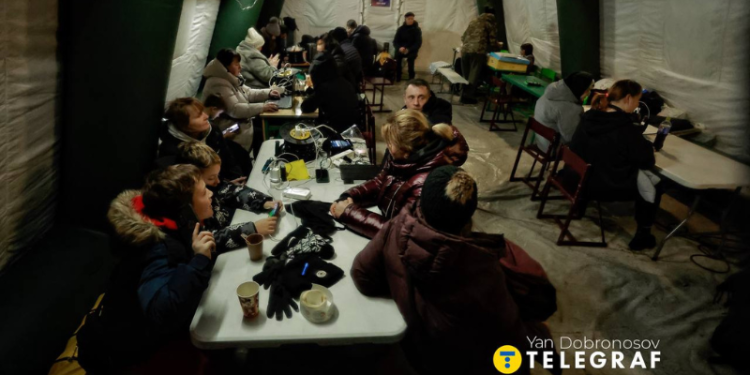
This winter in Ukraine has become another severe test. Large-scale russian attacks targeting energy infrastructure have caused constant power outages and heating disruptions, while temperatures have dropped to −25 °C. These conditions have made everyday life extremely difficult and forced people to find ways to stay warm and meet basic needs. For journalists in Kyiv, such realities create additional obstacles while working outdoors, preparing materials, and maintaining communication. Routine tasks such as charging equipment or filming a story have turned into tests of endurance.
To help journalists continue their work under such extreme conditions, the National Union of Journalists of Ukraine (NUJU) operates a nationwide network of Journalists’ Solidarity Center (JSC) in frontline and high-risk regions, including Kyiv, Kharkiv, Zaporizhzhia, and Dnipro. The Centers provide safe working spaces, access to electricity and internet during blackouts, protective equipment, emergency assistance, and coordination support for local media teams. Since the start of the full-scale invasion, thousands of journalists have relied on this network to continue reporting despite war and infrastructure destruction.
In conversations with the NUJU, Kyiv-based media workers described the situation in their homes and how they adapt to the cold and unstable reality.
Yan Dobronosov, a photojournalist for the online outlet Telegraph, lives in the city district of Troyeshchyna, a large residential district on Kyiv’s left bank that receives electricity from CHPP-6, Ukraine’s largest thermal power plant. The facility has been under repeated russian drone and missile attacks for months. As a result, the neighborhood regularly experiences heating outages and unstable electricity supply.
“Frost and enemy shelling affect our work. The job becomes much harder, and you lose energy and strength much faster because of the cold,” Yan says. There is no thermometer in his apartment, so it is difficult to determine the exact temperature indoors. During severe frosts, he tries to minimize time spent outside when temperatures drop below −15 °C. Despite everything, he continues to cover important stories.
Winter fieldwork creates serious technical challenges: batteries drain quickly, hands freeze, and camera lenses fog when moving between cold air and warm rooms. Yet Yan remains motivated. “This is what drives me because I feel fulfilled in my work. It’s my main heater and motivator,” he explains.
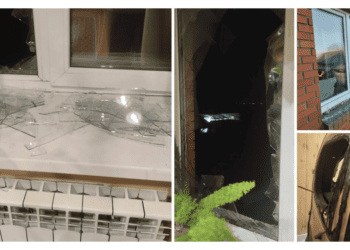
Similar challenges exist among journalists living in the district of Rusanivka, another residential area on Kyiv’s left bank that has also suffered from shelling damage. Professor Viktoriya Shevchenko, PhD in Social Communications and NUJU member, says several nearby buildings have broken windows and disrupted electricity, heating, and gas supply.
“We were without power for about 12 days. No light, no heating, nothing,” she recalls. In her high-rise building, heating depends on electricity, so power outages left radiators completely cold.
Recently, a radiator burst in her apartment, flooding furniture and walls. With assistance from a local council member who arranged a generator for the building, heating has finally been partially restored. Electricity is available for only one or two hours a day.
“I think the situation is roughly the same across Kyiv: some people have no constant electricity, some no heating, some no water, some have nothing at all,” Viktoriya says.
Working under these conditions requires additional organization. Viktoriya conducts lectures at the Institute of Journalism at Taras Shevchenko National University of Kyiv online, using portable charging devices and visiting so-called ‘Points of Invincibility,’ public locations where people can warm up and recharge equipment. “It’s psychologically difficult because you constantly have to think about basic needs, but we keep working and try to maintain morale,” she adds.
Journalist Kateryna Malofieieva, who also lives in Rusanivka, says she had to heat her apartment using gas and candles and block windows with blankets and pillows. “It’s such a strange feeling – when it’s not your home warming you, but you warming it,” she says. Due to a burst pipe in the basement, moisture has spread across the walls, and voltage fluctuations forced her to disconnect household appliances. Food is often stored on the balcony, as purchasing new equipment makes little sense until the electricity supply stabilizes.
Relocated journalists face similar challenges. Anna Serdiuk, the editor-in-chief of Free Radio from Bakhmut in the Donetsk Region, describes this winter in Kyiv as a combination of physical cold and constant improvisation in daily life.
“Over the past week, I’ve met 25 neighbors and have their phone numbers from my building and nearby ones. It helps when you can call someone and ask to charge your devices,” she says. Anna compares the winter to childhood memories of heavy snow and frost, except that now survival requires constant problem-solving. A small tent placed in her apartment serves both as insulation and as a makeshift workspace.
Infrastructure failures also affect media offices. The newsroom of relocated Realna Hazeta from Luhansk was recently flooded after a heating system failure. The building had been without heating since early January, and during severe frosts it became impossible to stay inside for more than a few minutes. Editor-in-chief Andrii Dikhtiarenko said radiators burst because water had not been drained in time. Although the studio equipment has not yet been damaged, the team is preparing to urgently relocate equipment in case of further temperature drops.
Similar heating failures caused flooding in the offices of the Institute of Mass Information and the Reporters Without Borders’ Center for Press Freedom, damaging premises and technical equipment used to support journalists.
NUJU President and EFJ Steering Committee member Sergiy Tomilenko notes that even professional organizations supporting journalists face serious operational difficulties. In January, the NUJU office in central Kyiv on Khreshchatyk was left without electricity for more than a day, and emergency water breaks left the building without water and heating for nearly a week.
“To restore heating and water supply, we needed stable electricity, which was unavailable in our district,” he explains. As a result, the NUJU had to temporarily suspend public events and postpone support initiatives for local media. At the same time, Tomilenko stresses that the NUJU continues its work remotely, through coworking spaces and through its network of the JSCs, providing safety assistance, emergency support, and professional coordination for frontline and local journalists, as well as supporting families of journalists illegally detained by russia.
In the last days of January and the beginning of February, the situation in Kyiv deteriorated further. Emergency blackouts spread across the city and surrounding region, affecting residential areas and public infrastructure. The Kyiv Metro temporarily halted train service and escalators due to outages at external power supply centers. Heating and water supply also began to fail in several districts, creating additional challenges for residents and journalists.
Despite freezing temperatures, blackouts, and constant security risks, Ukrainian journalists continue documenting the war and informing society. The support provided through the NUJU and its network of the JSCs, together with international professional solidarity, remains crucial to ensuring that independent journalism survives and continues to operate under wartime conditions.













Discussion about this post