

 THE NATIONAL UNION OF
JOURNALISTS OF UKRAINE
THE NATIONAL UNION OF
JOURNALISTS OF UKRAINE
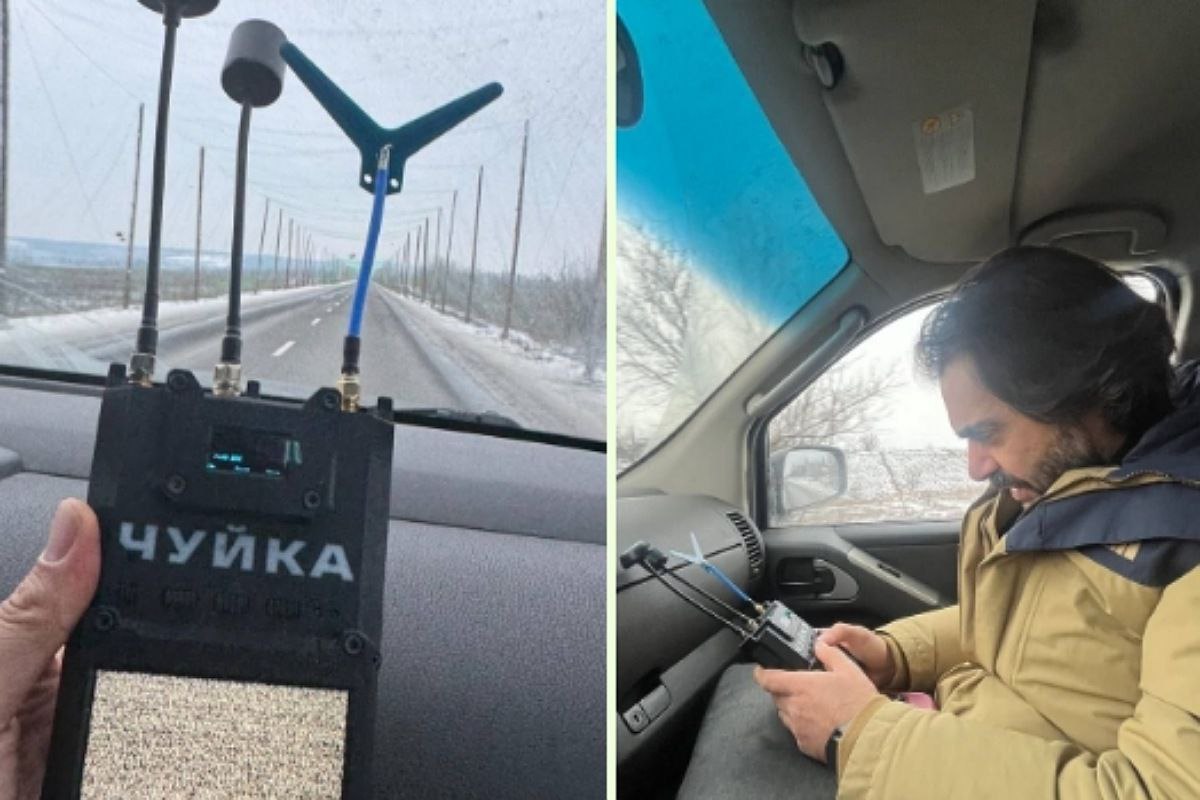
The situation in the Kharkiv Region, in particular in the Izium Community bordering the Donetsk Region and the strategic highway Sloviyansk – Izium – Kharkiv, is becoming increasingly critical. Russian troops have changed tactics: now, civilian cars and locals are becoming direct targets for enemy FPV drones, and cities are shuddering from guided bomb strikes.
Drone challenges
The Sloviyansk – Izium – Kharkiv highway has always been a key artery for humanitarian missions, media workers, and the civilian population. Today, every trip along it resembles a lottery for survival. According to journalists who regularly work in the region, enemy kamikaze drones are actually “taking turns” above the road, waiting for a target.
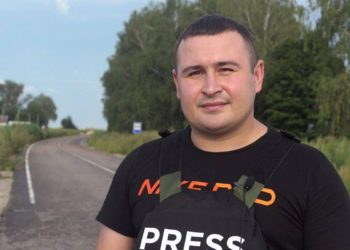
“We were driving along the main road, Sloviyansk – Izium – Kharkiv, and it was critical to have a detector for this section. The route is becoming increasingly dangerous. We didn’t see any drones on Chuika, but it still gave the illusion of control,” says journalist Zoriana Stelmakh.
She and her team used a drone detector during a trip to Kramatorsk. Less than a week ago, warning signs ‘Enemy drone attack zone’ appeared in the city. According to the journalist, the section between the Kharkiv and Donetsk Regions is currently one of the most dangerous for travel.
To minimize risks, journalists and volunteers are forced to use modern means of protection. In particular, a special drone detector was purchased and tested for safe travel along this section. This device allows you to detect the approach of an enemy UAV in advance by a characteristic signal, which gives the driver precious seconds to brake, pull off the road, or find shelter.
If you are planning a business trip to an area with an increased risk of drone strikes, you can rent such a drone detector free of charge at the Kharkiv Journalists’ Solidarity Center (JSC).
Contacts, mobile phone: +380 938 137 544 (coordinator Hanna Chernenko).
Massive strikes by guided bombs
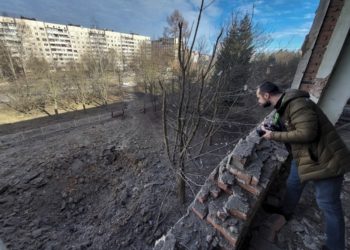
In addition to targeted drone attacks, the Izium region suffers from massive strikes by guided bombs every day. These bombs with a multi-hundred-kilogram explosive charge have enormous destructive power – they destroy entire neighborhoods, leaving craters and ruins behind them. Not only are military facilities hit, but also residential buildings, schools, and administrative buildings.
Local journalists emphasize that the tactics of the occupiers are aimed at total intimidation. Drones methodically “hunt” for individual cars and people, and guided bombs erase the infrastructure of cities and villages.
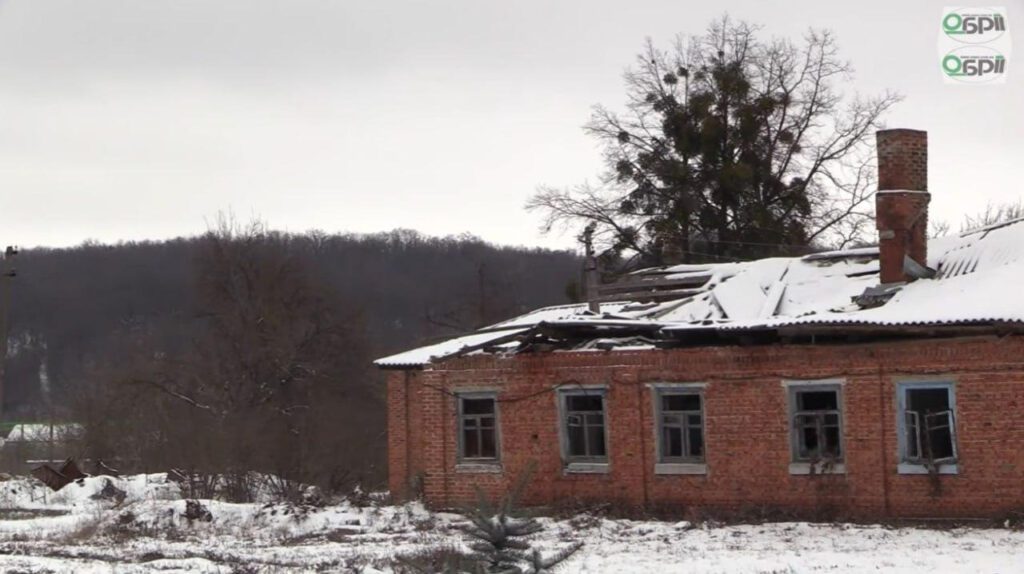
“A guided bomb explosion is a very scary thing: it detonates several hundred kilograms of explosives. It is an extraordinary stress,” says Kostyantyn Hryhorenko, editor-in-chief of the media outlet Obrii Iziumshchyny, in a comment to the National Union of Journalists of Ukraine (NUJU).
The other day, media workers from the publication were hit by russian guided bombs. The journalists were not injured, but they were directly in the attack zone.
“In Oskil, the cameraman and I managed to film a report on the evacuation. The front is moving, artillery shelling has become more frequent, and people are being urged to leave,” shares the editor-in-chief.
Working under the gun
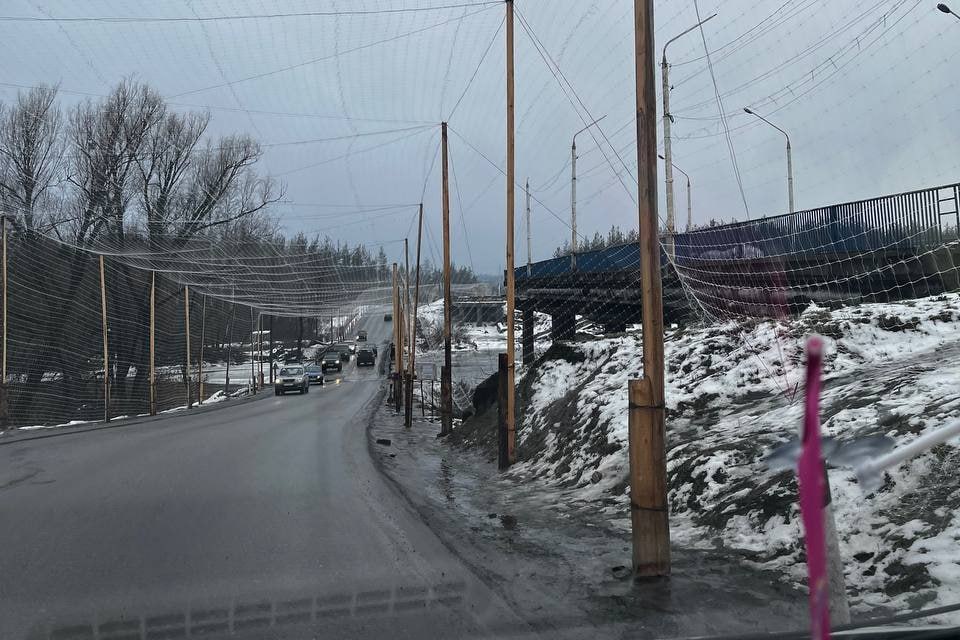
The incident in the Oskil Community is just one of the episodes of journalistic work in the frontline Izium region. Due to constant shelling and the threat of sabotage, media workers are forced to move under tunnels made of anti-drone nets, which partially protect against drone attacks.
However, these structures are quickly collapsing. They are damaged by shelling, freezing rain, and sleet, which breaks the nets, which were already planned as a temporary solution. In such conditions, the usual journalistic routine turns into a daily ordeal.
According to Kostiantyn Hryhorenko, shelling with guided bombs and Shahed drones has become commonplace for the Izium region, and “waiting” drones are operating on the roads, waiting for any movement. Because of this, journalists are already wary of traveling to some villages in the community – the risk to life is too high.
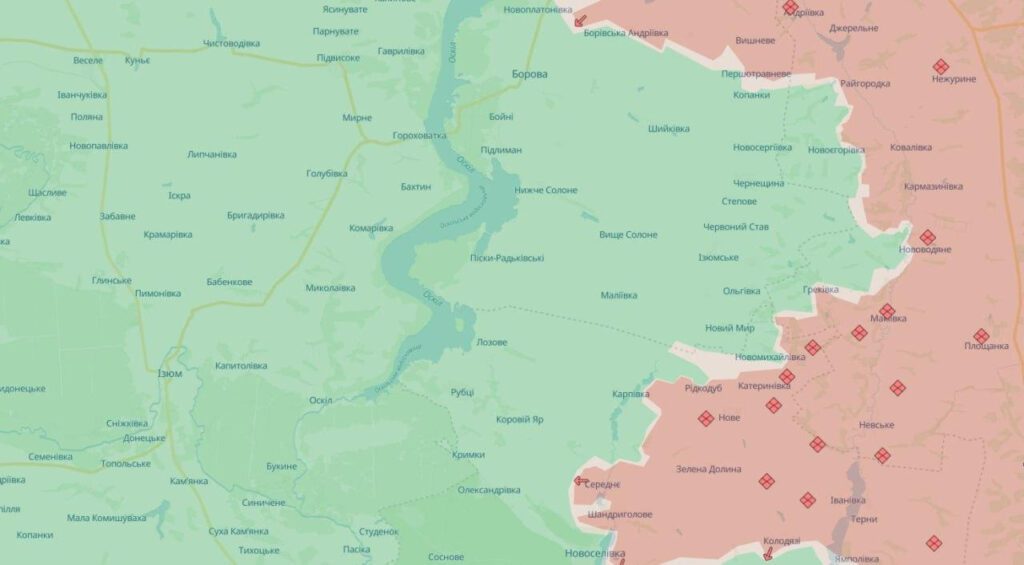
Despite the daily danger, media workers continue to cover events from the frontline zone. However, working conditions have changed dramatically. Today, a bulletproof vest and helmet are the minimum, to which electronic protection (detectors) has now been added. Routes are planned taking into account the activity of enemy aircraft and UAVs, and staying in open areas is reduced to a matter of minutes.
The situation in the Izium region once again proves: the enemy does not distinguish between military and civilians. Every trip by a journalist or volunteer to frontline cities is an act of great danger, requiring not only courage, but also modern technological training to counter new threats of war.
NUJU Information Service














Discussion about this post