 THE NATIONAL UNION OF
JOURNALISTS OF UKRAINE
THE NATIONAL UNION OF
JOURNALISTS OF UKRAINE
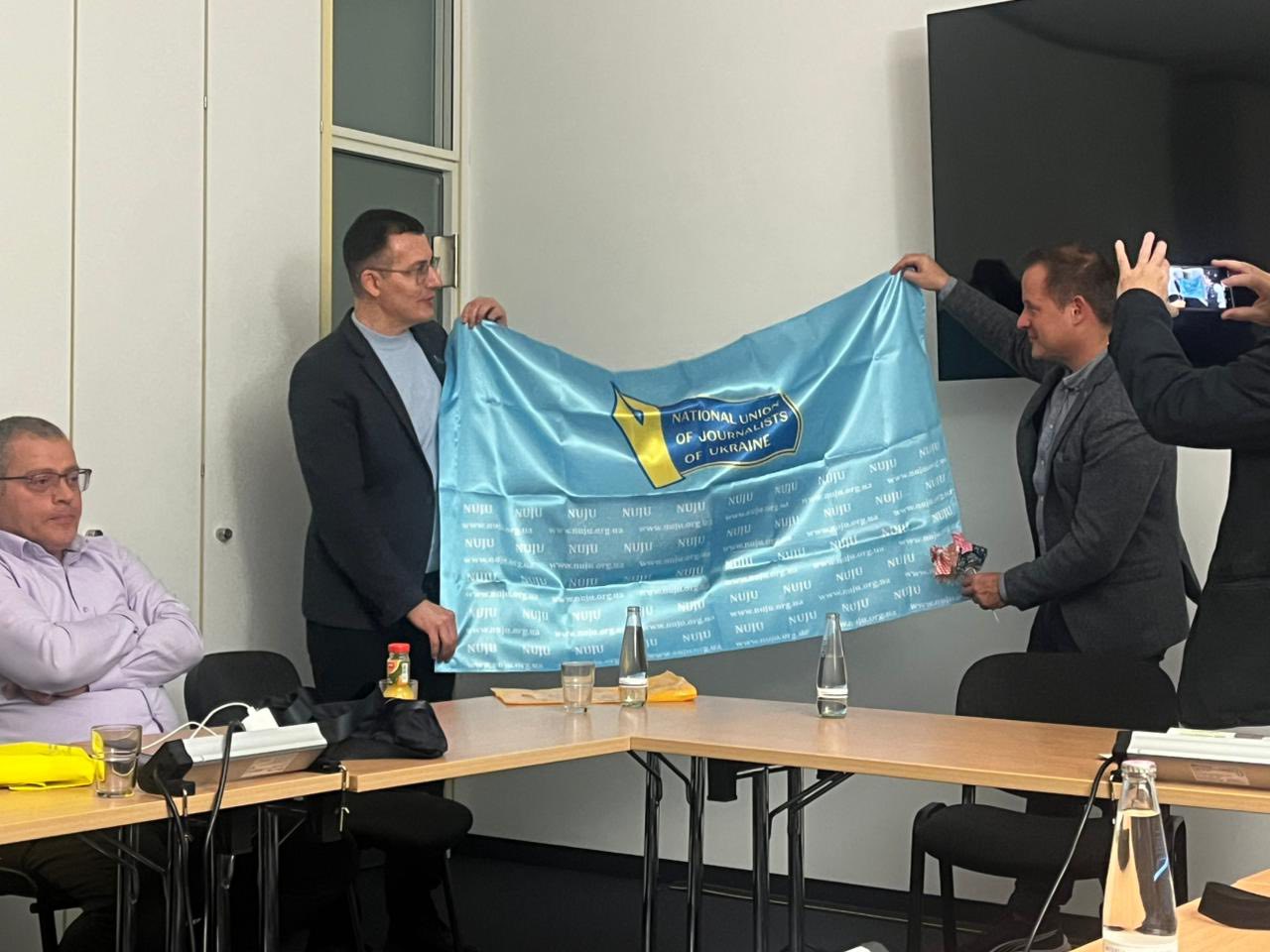
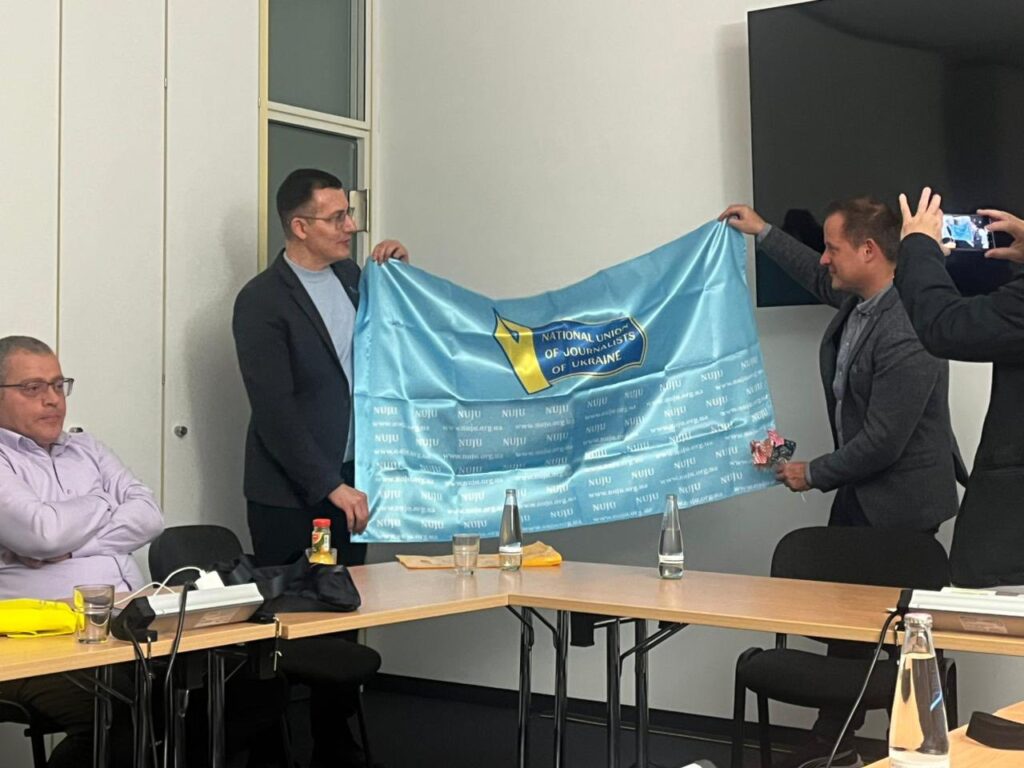
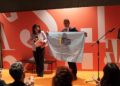
The flag of the National Union of Journalists of Ukraine (NUJU) was presented in Berlin by the President of the Union, Sergiy Tomilenko, to the president of the German Union of Journalists (Deutscher Journalisten-Verband, DJV), Mika Beuster, as a symbol of great gratitude of Ukrainian journalists, mutual trust, and long-term partnership.
Along with the flag, Sergiy Tomilenko brought copies of six front-line Ukrainian newspapers that continue to be published during the war, in part thanks to the fundraising campaign that DJV organized among German journalists. This was a sincere solidarity that allowed NUJU to support front-line newsrooms and journalists working under constant shelling. And colleagues from the Zaporizhzhia Journalists’ Solidarity Center (JSC) presented the President of the NUJU with unique handmade souvenirs for German friends, part of the Union’s program of mental support for evacuated media workers.
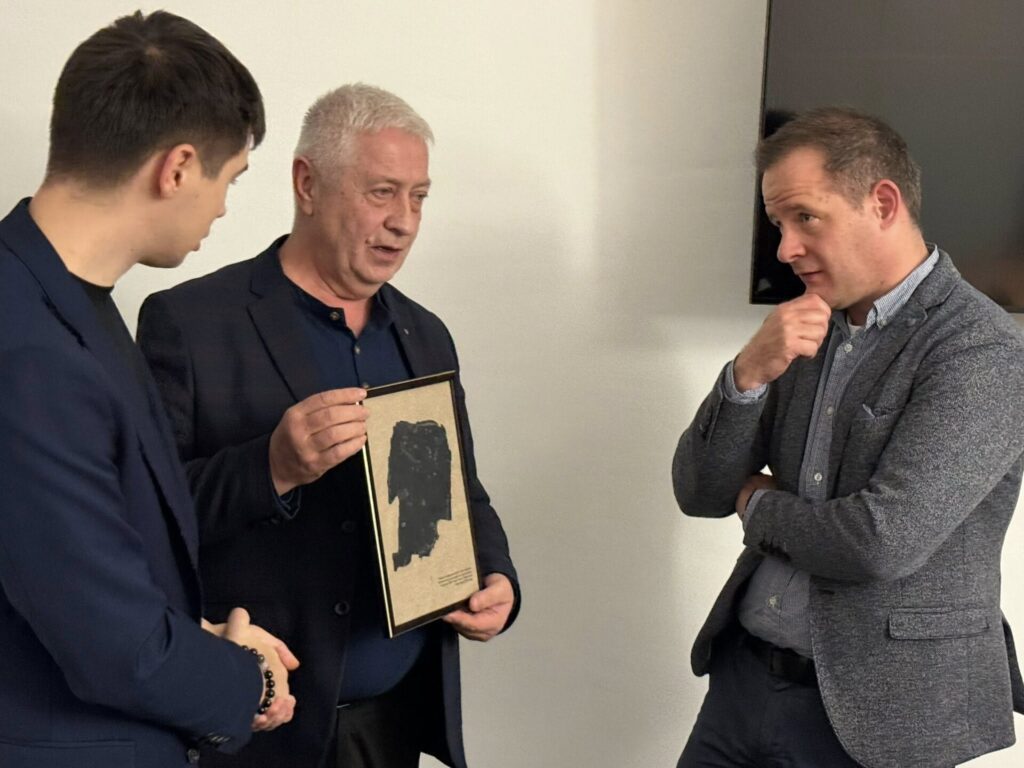
Member of the NUJU Board, Director of the Institute of Journalism of the Kyiv National University, Yurii Bondar, presented the president of the Deutscher Journalisten-Verband with another very telling artifact — a fragment of a russian missile that exploded near the Institute of Journalism of the Kyiv National University. This is a reminder of the dangerous reality in which Ukrainian journalism lives and works. Indomitable Ukrainians live and work.
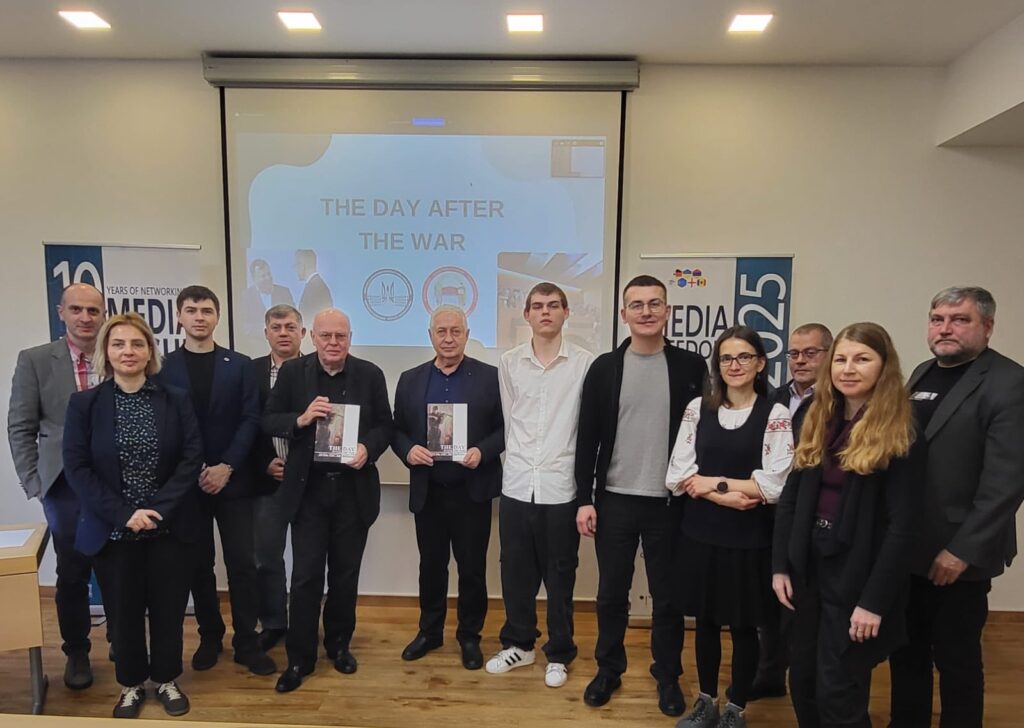
“It was especially important for me to convey these things here, in Berlin, where the Media Dialogue 2025 partner conference is underway, marking 10 years of our cooperation and joint fight against propaganda. The project participants — journalists from Ukraine, Germany, Georgia, Armenia, Moldova, and representatives of the Belarusian journalistic diaspora — are united today by one conviction: journalism should stand on the side of facts, freedom, and human dignity. And for this position, Ukrainian journalists pay a very high price every day,” Sergiy Tomilenko emphasized.
He added that this trip to Berlin is also symbolic for him because last year he had the honor of speaking at the DJV Congress, where he said words that sounded from the big stage, but were addressed to every journalist in Europe: “Don’t let Ukraine disappear from your news feeds.” At that time, German colleagues greeted the Ukrainian speech with a standing ovation — as a sign of respect for the courage and resilience of our reporters.
“And today I again see this sincerity, concern, and readiness to support Ukraine not with words, but with concrete actions,” Sergiy Tomilenko emphasized.
In Berlin, we had a warm and very meaningful conversation with Mika Beuster and DJV Berlin head Stefan Grimberg. We talked about the safety of journalists, about why printed front-line newspapers often remain the only source of truthful information when there is no electricity or the Internet, and about how international support helps Ukrainian media stay afloat in wartime. Cooperation with DJV is also about concrete results: about six front-line newspapers that were able to continue publishing, about six war correspondents who received support for working in extremely dangerous conditions, and about dozens of symbolic and real gestures of solidarity. Sergiy Tomilenko thanked all friends from DJV, including Andrea Roth and Harald Stocker from the Bavarian Journalists’ Association (Bayerischer Journalisten-Verband – BJV), as well as Dr. Wolfgang Ressmann, who organized this conference and has been building strong bridges between Ukrainian and German journalists for ten years. “Ukrainian journalists continue to work where it is often impossible to work. And we continue to remind the world: the truth needs protection, and journalists need support and solidarity,” Sergiy Tomilenko concluded.
NUJU Information Service










Discussion about this post