

 THE NATIONAL UNION OF
JOURNALISTS OF UKRAINE
THE NATIONAL UNION OF
JOURNALISTS OF UKRAINE
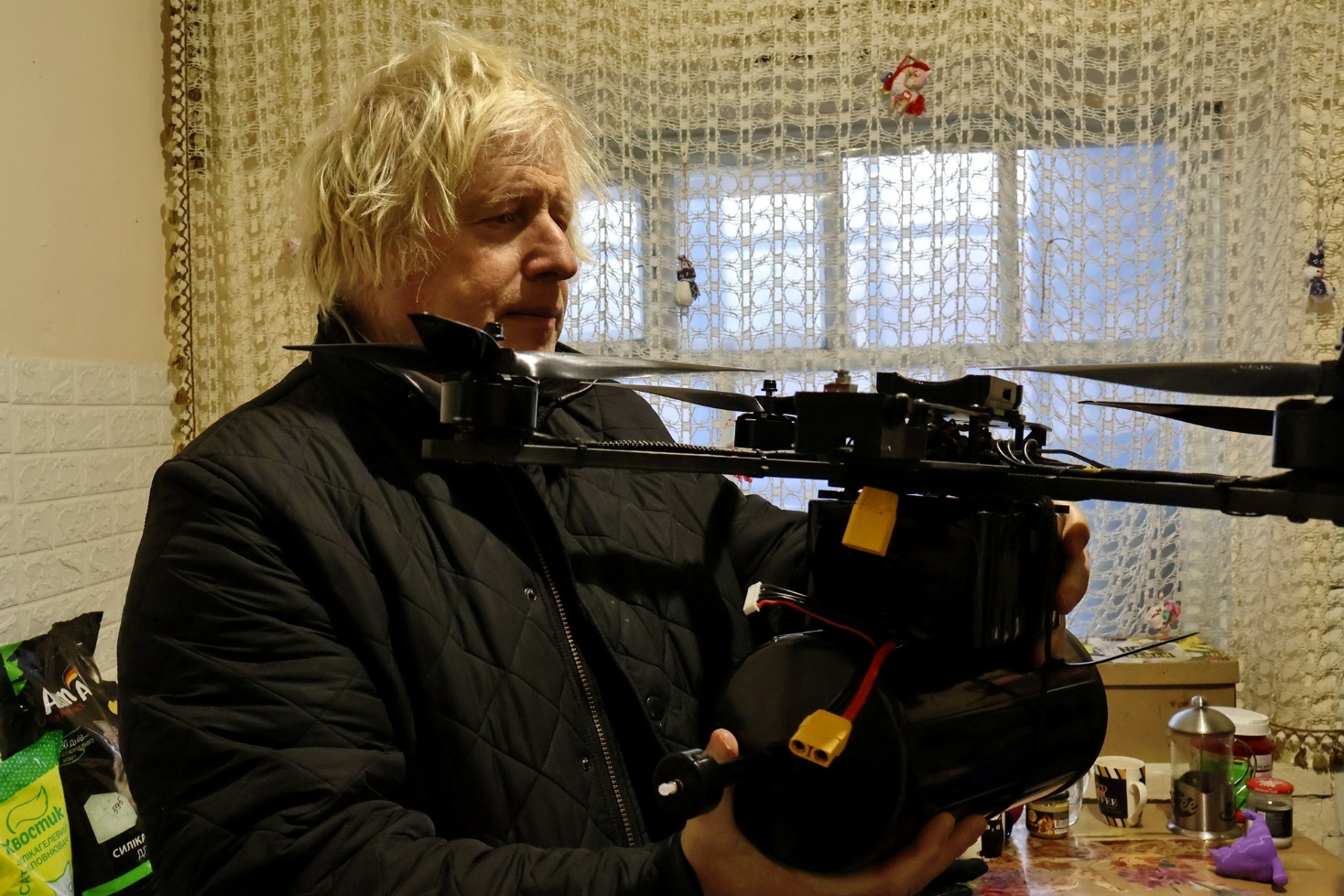
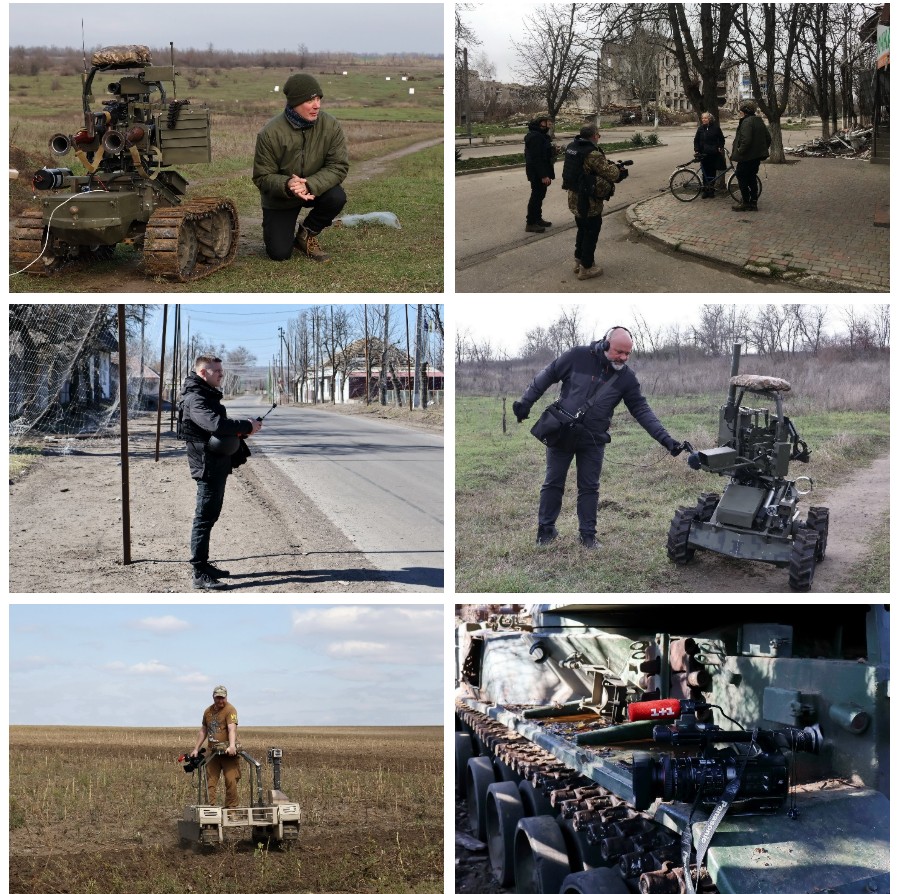
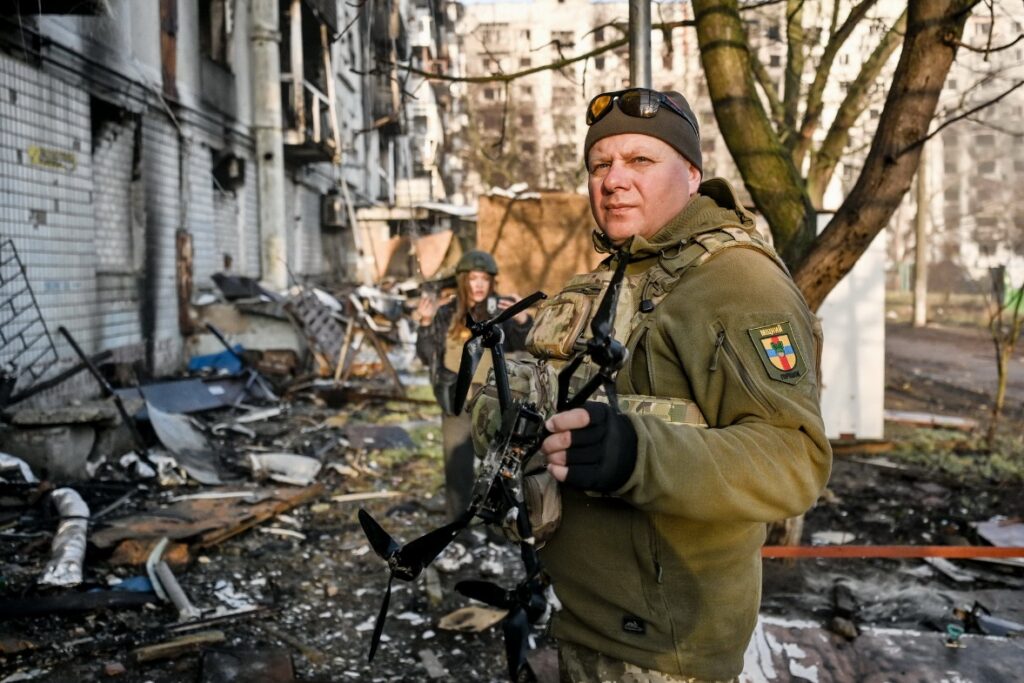
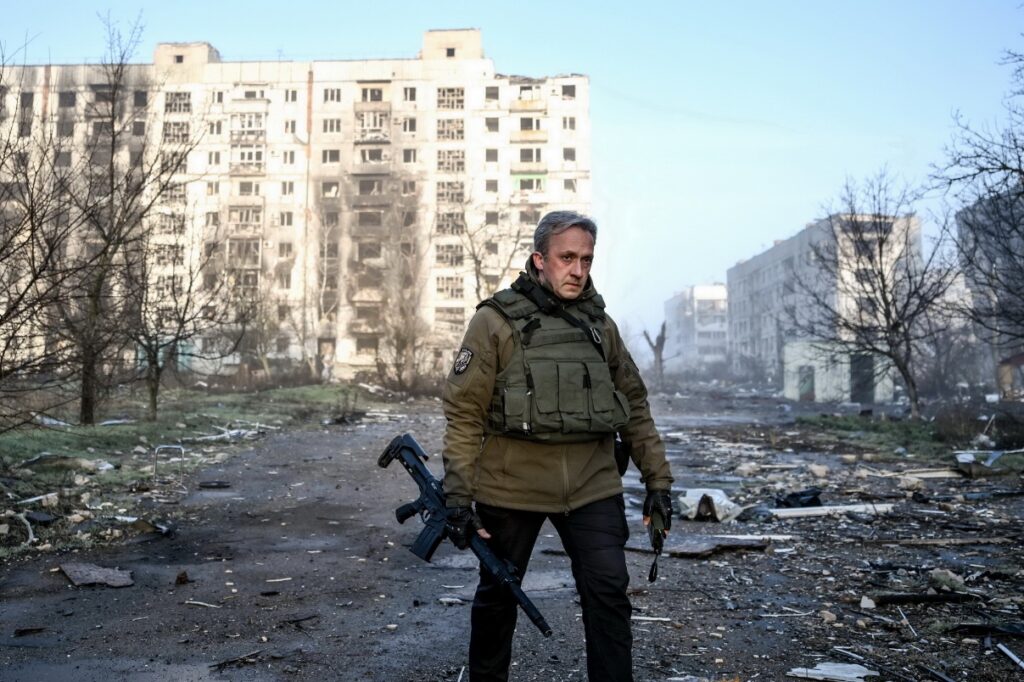
The public relations service of the 65th Separate Mechanized Brigade is four people, one unarmored Toyota, a radio-controlled machine gun, a regular weapon, a shotgun and a drone detector. They accompany journalists into the red zone, where every trip is like a military operation. Among those they have received in their area of responsibility is the former Prime Minister of Great Britain, and now a journalist, Boris Johnson.
When the British newspaper Daily Mail published a major report by Boris Johnson from the Zaporizhzhia Axis, the President of the National Union of Journalists of Ukraine (NUJU) Sergiy Tomilenko was able to tell what he had kept secret for several weeks: exclusive photos from the former British Prime Minister’s frontline trip were taken by the press officer of the 65th Brigade, a member of the NUJU Andrii Andriienko. It was this Brigade that received Johnson at its positions.
We spoke with the head of the communications department of the 65th Separate Mechanized Brigade, Veliky Luh, Serhii Skibchyk, and press officer Andrii Andriienko about how they organized the visit of the world’s most famous journalist, how they work with the media under the constant threat of drones and why a laptop at the front is as expendable as ammunition.
Johnson on the front line: “Very curious eyes, serious”
Boris Johnson arrived in the Zaporizhzhia Axis at the end of February. The former prime minister, who was starting his career as a journalist, asked the Daily Mail frontline team to organize a trip to the front line. They agreed: to keep the photo and publish it at the same time as the material was published in the newspaper.
“Johnson visited quite dangerous places, in fact, in the kill zone, they even made a film when he arrived,” says Andrii Andriienko. “He arrived, met with the fighters, asked questions, asked what was needed. He met with our drone pilots in my presence – he was interested in what drones we have, how the pilots work, how many of the enemy have been destroyed. You can see – a person who is sincerely interested. Such, you know, very inquisitive eyes, serious.”
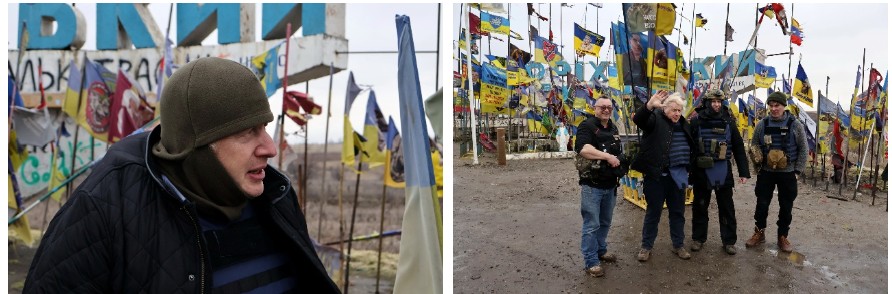
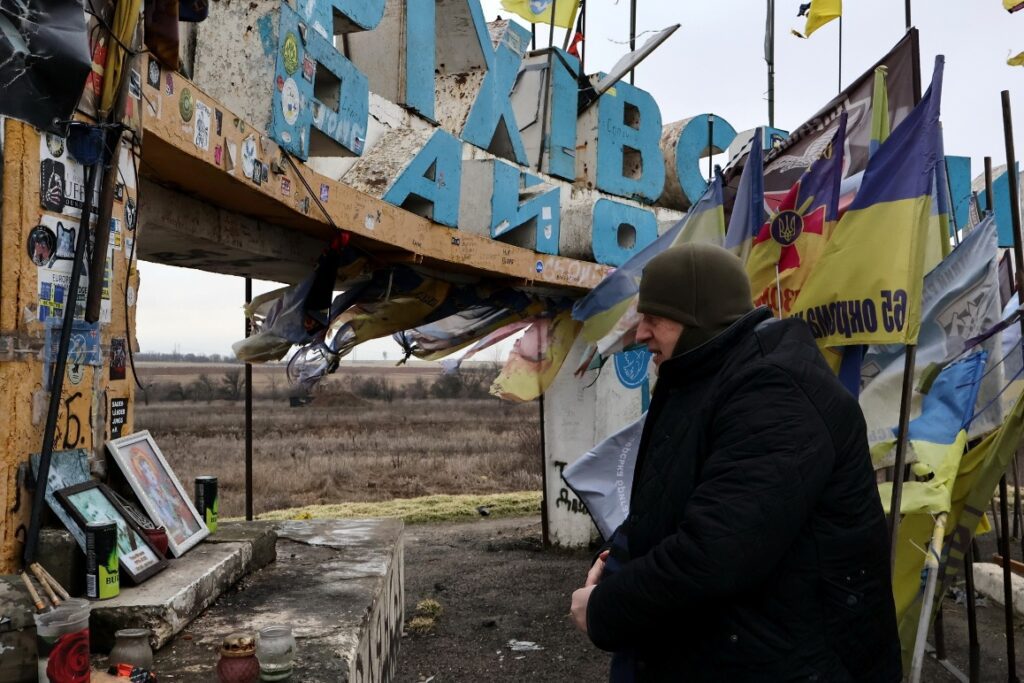
Johnson’s visit came at a turbulent time. According to Andriienko, on the night of his arrival, Zaporizhzhia was seriously attacked by Shahed drones, “everything was thundering”. But Boris spent 48 hours near the front line – meeting with fighters, talking with drone pilots, asking about their needs.
In his report, Johnson described a fighter with the call sign ‘Coco’, a drone pilot who destroyed 434 occupiers, was seriously wounded by a tank shell, refused amputation and… returned to fight. He described Yurii, in civilian life a ping-pong coach, who now goes out into the field with his men at night and shoots drones with a Browning machine gun of the 1917 model. He met twenty-four-year-old Dasha, a soldier of the communications department from Kramatorsk, who joined the army to defend his hometown.
The publication was delayed due to the aggravation of the situation around Iran: international newsrooms switched to a different agenda.
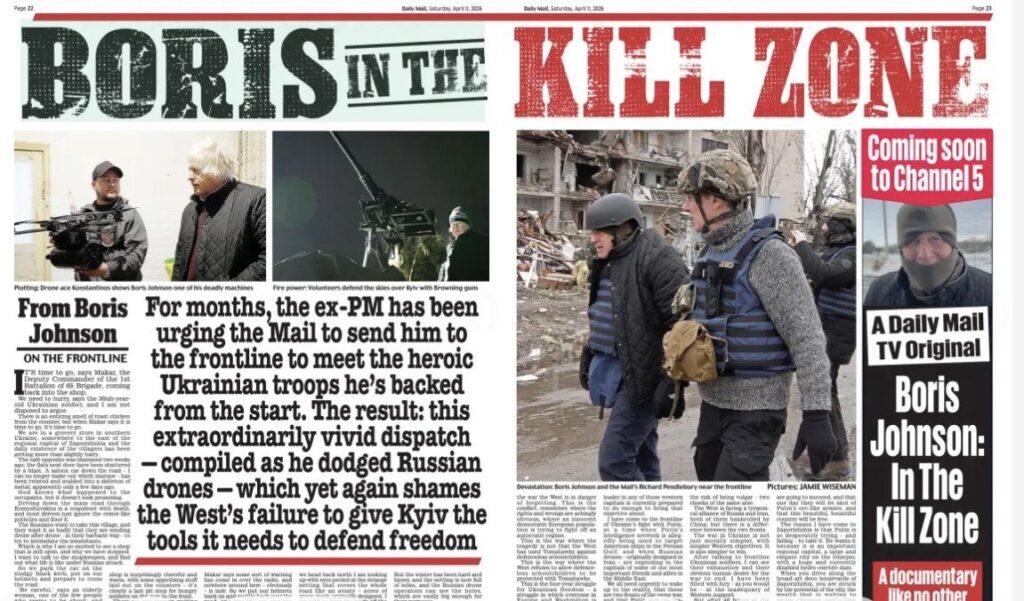
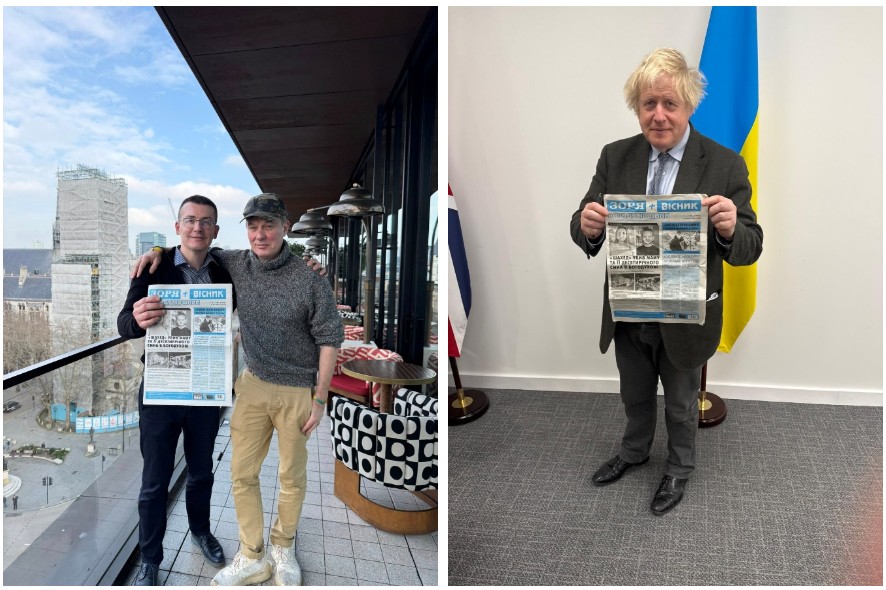
By the way, during a London meeting with Daily Mail war correspondent Richard Pendlebury, NUJU President Sergiy Tomilenko handed Boris Johnson a copy of the frontline Zoria newspaper from the Kharkiv Regio, the same one that editor Vasyl Myroshnyk delivers every week to villages a few kilometers from the front line. Pendlebury called this route “one of the most dangerous newspaper routes in the world.” Johnson took the newspaper in his hands and admitted that Vasyl’s work was impressive. For the Ukrainian ‘Indiana Jones of journalism,’ this is probably the most unusual reader in the entire history of Zoria.
“In fact, today we are both communicators, journalists, drivers, and a fire cover group”
Johnson’s visit is a vivid, but far from the only example of the work of the 65th Brigade’s communications service. Four people organize the work of journalists every day in a zone where every kilometer is controlled by enemy drones.
“If we take, say, February, we had 19 requests for work from foreign and Ukrainian media outlets,” says Serhii Skibchyk, the head of the communications department. “Unfortunately, the trend is that foreigners are asking us more. With each newsroom, we work out a plan, their editorial task. And we select specific topics or heroes, appropriate locations, according to their needs.”
But there is a gulf between the line “worked one day” in the report and reality. To organize, for example, the arrival of Oleksandr Matornyi from the TV channel “1+1”, who was filming stories about artillery and drone pilots, it was necessary to coordinate the weather, obtain permission to open fire and use ammunition, organize night transportation to the position and respective night evacuation. And then at dawn, transport journalists from position to position, practice again – and already in the afternoon, under the sights of enemy drones, successfully transport them to a safe zone.
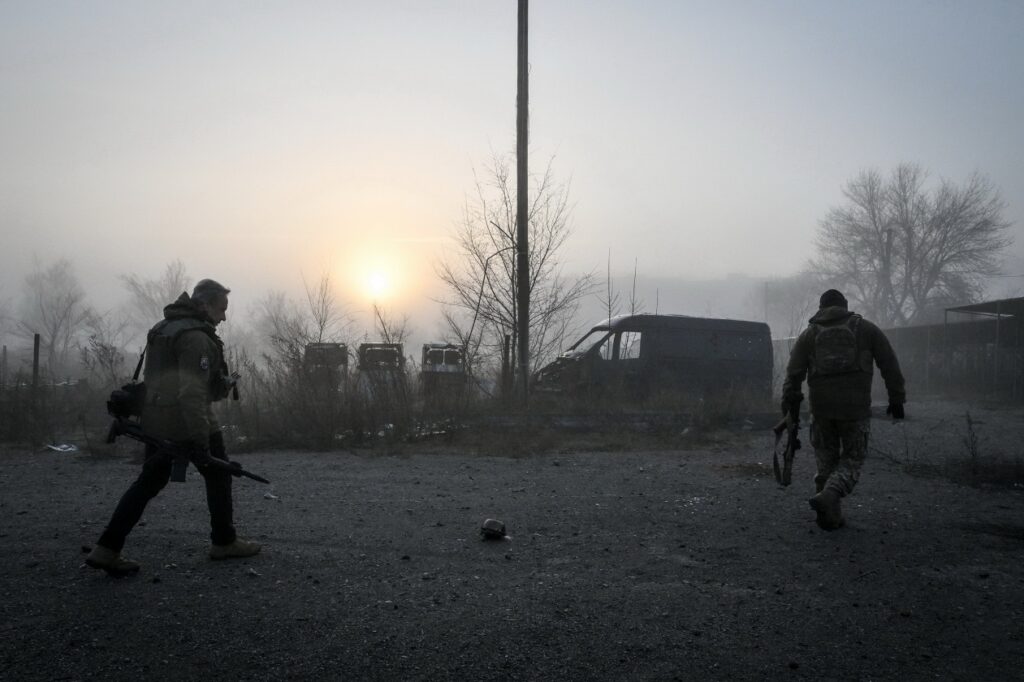
“In fact, today we are all in one communicators, journalists, military drivers, and a fire cover group,” describes the daily routine of Captain Skibchyk. “The affected area has increased to almost 30 kilometers. Even driving to the front line is already quite a dangerous business, a roulette wheel. We bring journalists ourselves, in our own transport, with a rifle, with a firearm from our servicemen. But due to the dominance of enemy drones, we will soon have to change to armor.”
Orikhiv: “Guys rivet bombs while women grow flowers”
The city of Orikhiv in Zaporizhzhia is one of the key points where press officers of the 65th Brigade take journalists. This is already a red zone: the front line is five to six kilometers from the outermost buildings, and drones reach much further.
“The situation is getting worse every day,” says Serhii Skibchyk. “The zone of drone attacks is growing. Today, technology actually determines the face of the war. It is very dangerous to enter and leave there. But 535 civilians remain in the city. Municipal services, police, and firefighters work there. There is a paraphrased saying: guys rivet bombs while women grow flowers. In Orikhiv, this is very clearly manifested. You drive through the city and see women weeding flower beds, watering flowers, and mowing lawns. It is very motivating.”
Andrii Andriienko tells how the tactics of trips have changed:
“Previously, back in the fall, we could drive in and out during the day. Now we try to drive in the morning, at dusk, and work as quickly as possible. It has become much more dangerous in just a month. As far as I know, only the 65th Brigade still transports journalists to Orikhiv. No one else.”
In winter, when for the first time in ten years, there was serious snow in Zaporizhzhia, journalists were not transported for more than a month: there are no leaves on the trees, you can see both a person and a car in the snow, and even footprints.
“Then the snow melted, we first drove around ourselves, worked out the routes. And we started transporting again,” says Andrii Andriienko.
One of the trips almost ended tragically.
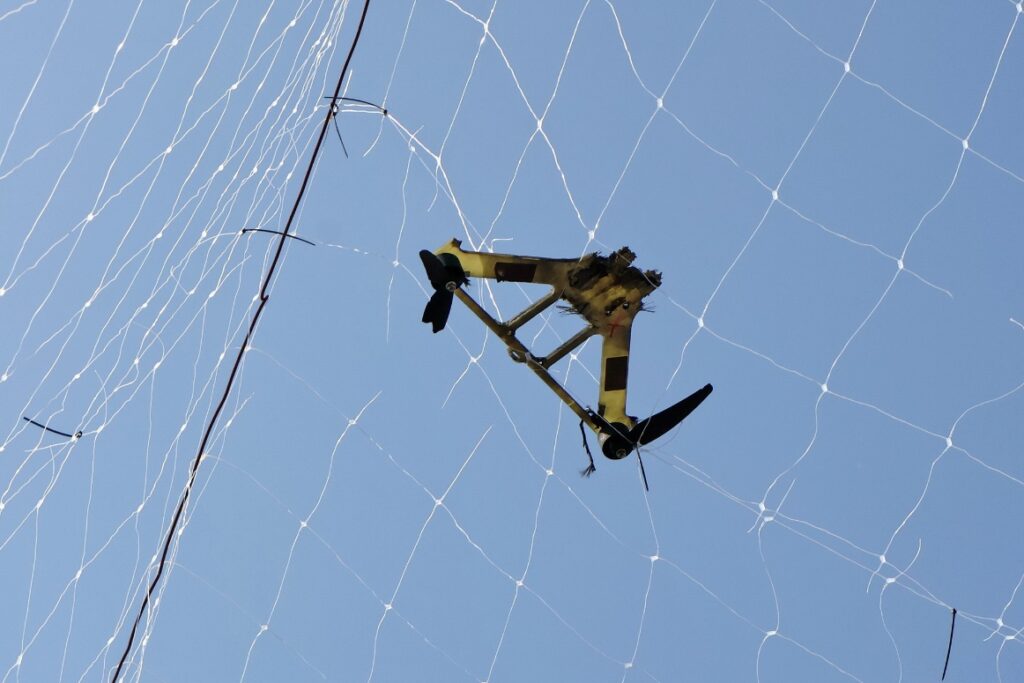
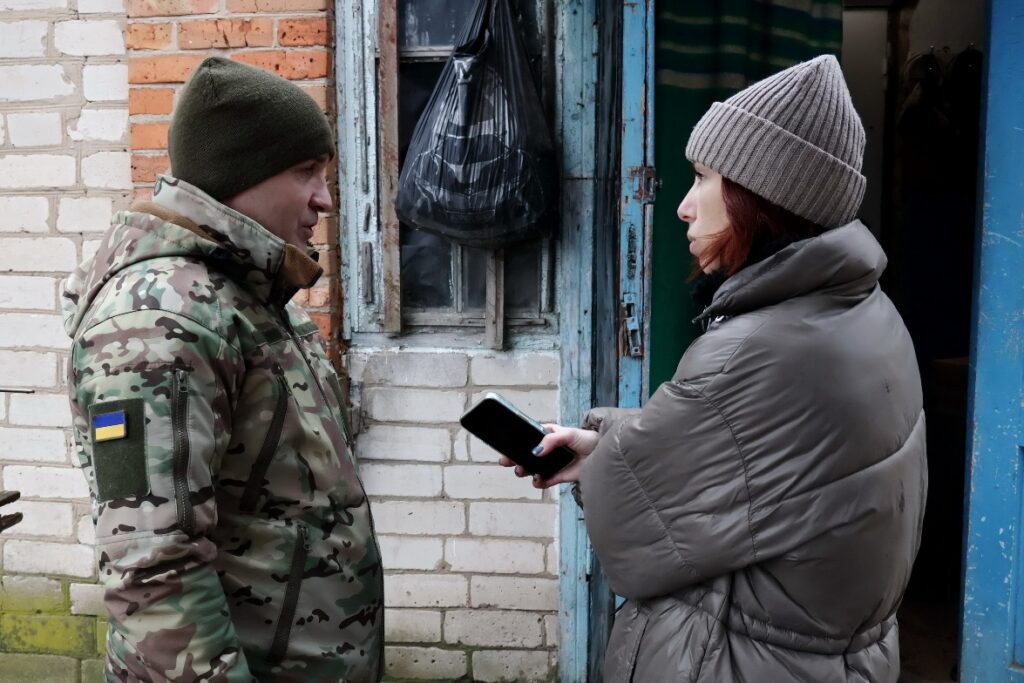
“We, the journalists from the Zaporizhzhia-based Piyata Redaktsiya and Ukrinform newsroom, worked in Orikhiv and drove back,” says the press officer. “We decided to stop in the settlement of Komyshuvakha, it’s halfway to Zaporizhzhia, 30-35 kilometers from Orikhiv. We stood in the shade so that the car wouldn’t be visible. As soon as we took off our body armor, the sound of the FPV… It practically emerged from behind. But apparently, the battery had already been planted in the drone. About 45 meters from us, it just slammed into the road. It’s good that neither car caught fire, everyone is alive. But this is 35 kilometers from Orikhiv! The FPV is already there.”
And in November, journalists from the Piyata Redaktsiya and Ukrinform got stuck at the Orikhiv railway station.
“An enemy Mavic reconnaissance drone was hovering above us, and pairs of FPV drones were circling around, clearly on fiber optics – the detector didn’t see them. I heard that they were very close. But if you shoot down a drone – you’ll be exposed. The weather is cloudy, and after practicing on enemy unexploded ordnance, we only had tracer rounds left – the queue is visible from afar. The Mavic looks from above where they’re firing from, fixes the position. They can practice with artillery in two or three minutes. So, when we hear a drone – we immediately go to cover. Especially when we’re with civilians. Our task is for journalists to do their material and return alive.”
For three hours, enemy drones hunted us, not letting us leave our shelters. But in the end, we managed to safely return from the danger zone – and bring an exclusive report for Ukrainian viewers.
But despite all the attacks, the residents of Orikhiv, according to the press officer, “cannot be defeated.” He enthusiastically recounts the story of a local resident, Liliya.
“She was riding a bicycle, a drone on a fiber optic cable began to hunt her. She abandoned her bicycle and hid under a tree. The drone began to circle around her. Usually, she grabs the fiber optic cable with her hands and breaks it, the drone falls. And then she got so excited that she grabbed the fiber optic cable with her teeth and bit into it. The drone fell. These are the indomitable people of indomitable Orikhiv,” says Andriienko.
On Palm Sunday, the press officers organized a filming of a touching event for journalists: chaplains blessed a willow tree in the Orikhiv Holy Protection Church. The dome is destroyed, the roof is barely holding up after direct hits. The temple, according to Skibchyk, has become a landmark for enemy drones, so being nearby is an additional risk…
Among the media workers who impressed Andrii Andriienko with their resilience is Zaporizhzhia journalist Olha Zvonariova. On April 5, 2024, she was hit by a missile in Zaporizhzhia. She was seriously injured in the leg. But Zvonariova recovered, returned to work, went in for sports and even ran a half marathon.
“After such an injury, a person could refuse to go out at all,” he says. “But she still leaves. She works more in Zaporizhzhia and the surrounding area, but she also goes to Tavriiske. And once may be enough there, the road is monitored by drones, a guided bomb may hit at any moment. An example of the resilience of journalists.”
Women in war and documentary creation instead of news
Serhii Skibchyk notes that the Brigade consciously shifts the emphasis in communication work from the news direction to documentary.
“Documentary is eternal. We make films about combat brotherhood and about career stories. For example, one fighter returned from abroad, went to war as an ordinary soldier, was wounded, but returned; re-certified, and today he is an officer, commanding a company. For another, this is the fourth war he has been fighting in, having come from Spain, where he has lived for 20 years. Or a pastor, a father of eight children, who came to the Brigade to fight with his son. And, of course, we document the war crimes of russians in the frontline zone.
“In general, we select stories that carry memory,” says the press officer.
A full-length documentary film for an hour is being prepared for the fourth anniversary of the Brigade, it is planned to be shown in cinemas.
A separate direction is the destruction of stereotypes.
“Journalists often ask about women in the army,” says Skibchyk. “We have female artillerymen, female pilots who successfully destroy the enemy, and fly reconnaissance drones. For example, on March 28, a female crew participated in repelling an assault, they worked very successfully, destroying enemy equipment and manpower.”
Another stereotype that communications workers work with is that mobilized people are supposedly thrown into battle immediately:
“In fact, first there is basic military training, then coordination in the unit, then adaptation in positions. Fighters go on independent combat duty only after three to four months, and sometimes after six months. We systematically debunk these myths about the impossibility of surviving in the infantry.”
“A laptop is an expendable part, like ammunition”
When the conversation comes to the needs of the communications service, the interlocutors talk about the same thing: equipment. First of all, a laptop, an editing station for video processing.
“The laptop that we always have with us is barely breathing,” says Andrii Andriienko. “The car shakes, there are such potholes that the equipment should not withstand so much. Hard drives are destroyed very quickly. And the laptop is needed to save information and process it quickly, we often have to work in the field, where there is only Starlink on the car. So, a laptop on the front is an expendable part that needs to be updated periodically. They do not last long.”
Serhii Skibchyk adds:
“We have huge requests from television, journalistic organizations, and volunteers. We need high-quality 4K video. Some phones can shoot such quality, but there is nothing to edit the video with and process it. Sometimes we have to make a few-minute story for seven hours. We need editing stations or at least a powerful laptop capable of working with modern formats. Monopods, cameras… There is practically no provision. Everything is our own, everything is personal. We shoot on mobile phones, edit on home computers that are already breathing like incense. There really is a need.”
The laptop on which all the materials are stored and edited, including the footage from Boris Johnson’s visit, according to Serhiy Skibchyk, “we have already repaired it over and over again, we have miraculously restored all the information several times (and this is the history of the Brigade over 4 years!). But we still fear that at some point it will tell us a ‘goodbye’ anyways”. Part of the history of the Brigade filmed over the months may also say ‘goodbye’. So, if someone wants to help – the press officers of the 65th will not refuse.
Maksym Stepanov
NUJU Information Service














Discussion about this post