 THE NATIONAL UNION OF
JOURNALISTS OF UKRAINE
THE NATIONAL UNION OF
JOURNALISTS OF UKRAINE
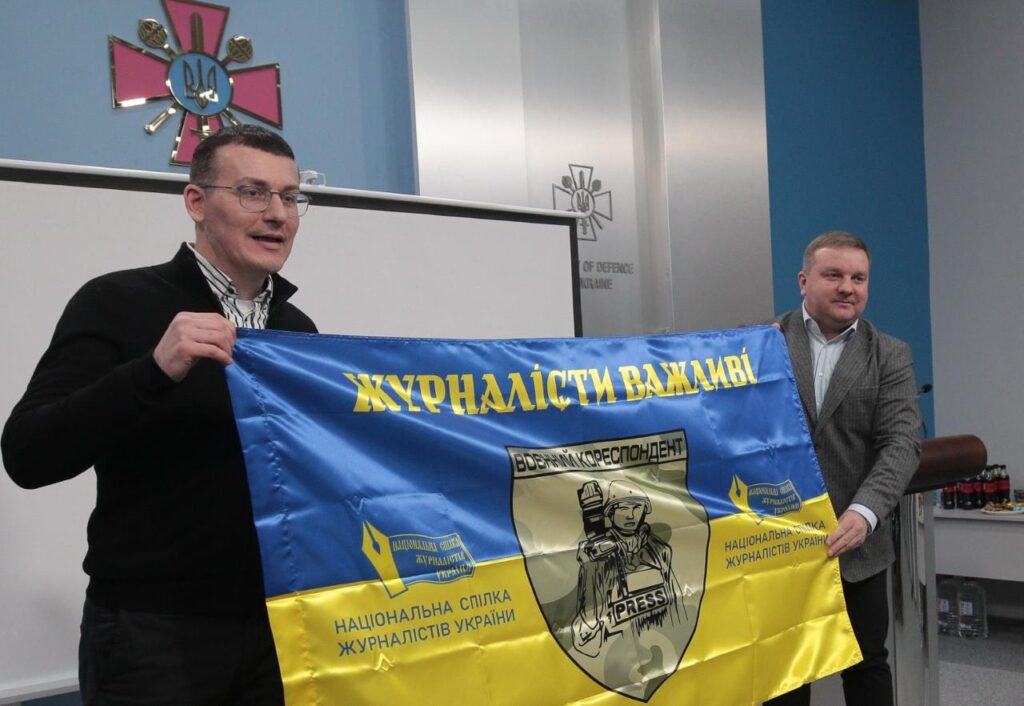
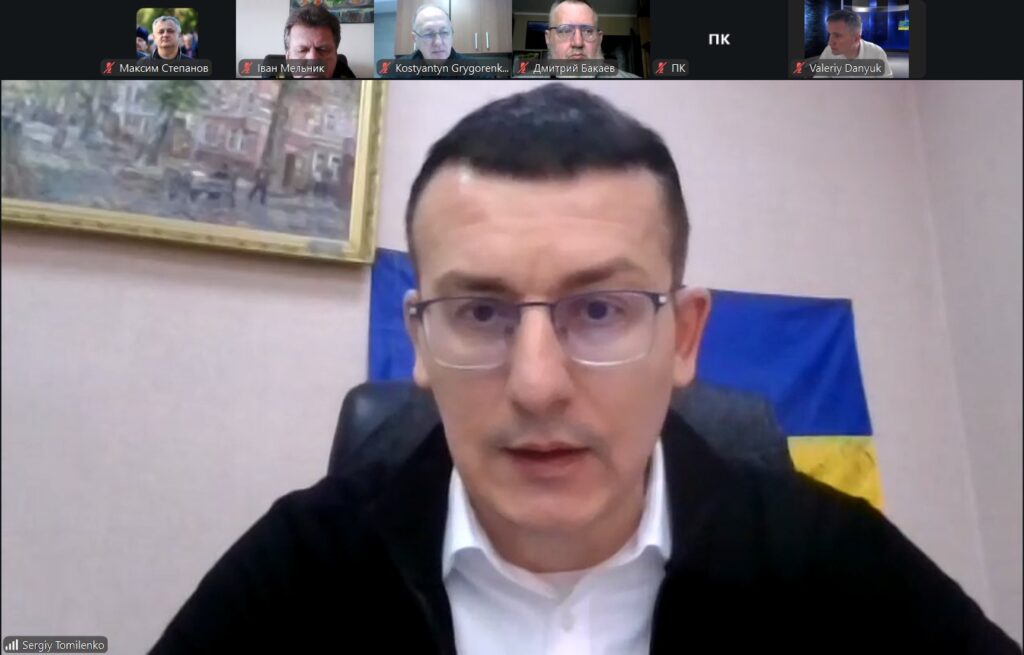
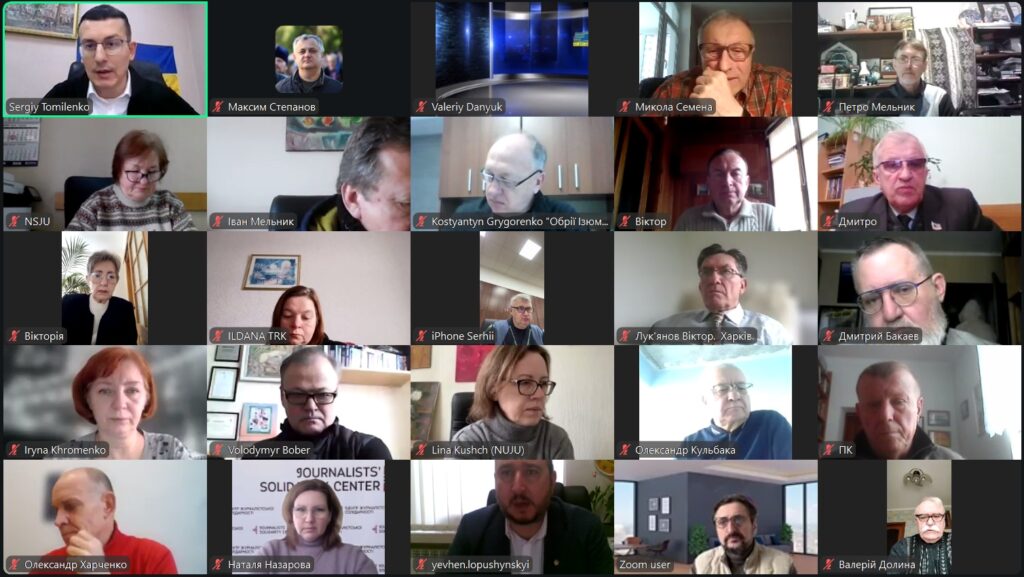
The President of the National Union of Journalists of Ukraine (NUJU), Sergiy Tomilenko, in his speech at the meeting of the Board on January 22, outlined a dramatic picture of the state of the media in Ukraine, but at the same time emphasized specific achievements in supporting journalists. From emergency assistance to the wounded to the rescue of entire newsrooms, the Union continues to be a network of mutual support.
“2025 was a grueling war year,” stated Sergiy Tomilenko. “The results are indeed largely sad: international support programs are being reduced, and government capabilities to support the media are weak. The biggest blow is to the regions. Many media outlets have closed, and jobs are being lost.”
The media landscape of 2025-2026 is fundamentally different from what it was before the full-scale invasion. Internal resources for the sustainability of the media are not enough. But, despite all the challenges, the Union has created a response system. Thanks to donations from the Danish Union of Journalists, an emergency response fund is operating.
“Every journalist who has been injured, who has lost his home, is guaranteed to receive some, albeit small, material assistance,” emphasizes Sergiy Tomilenko.
But the matter is not limited to emergency measures. The Union creates long-term programs, including support for the frontline press, maintenance of the network of Journalists’ Solidarity Centers (JSC), training programs, and international programs for the restoration of the media.
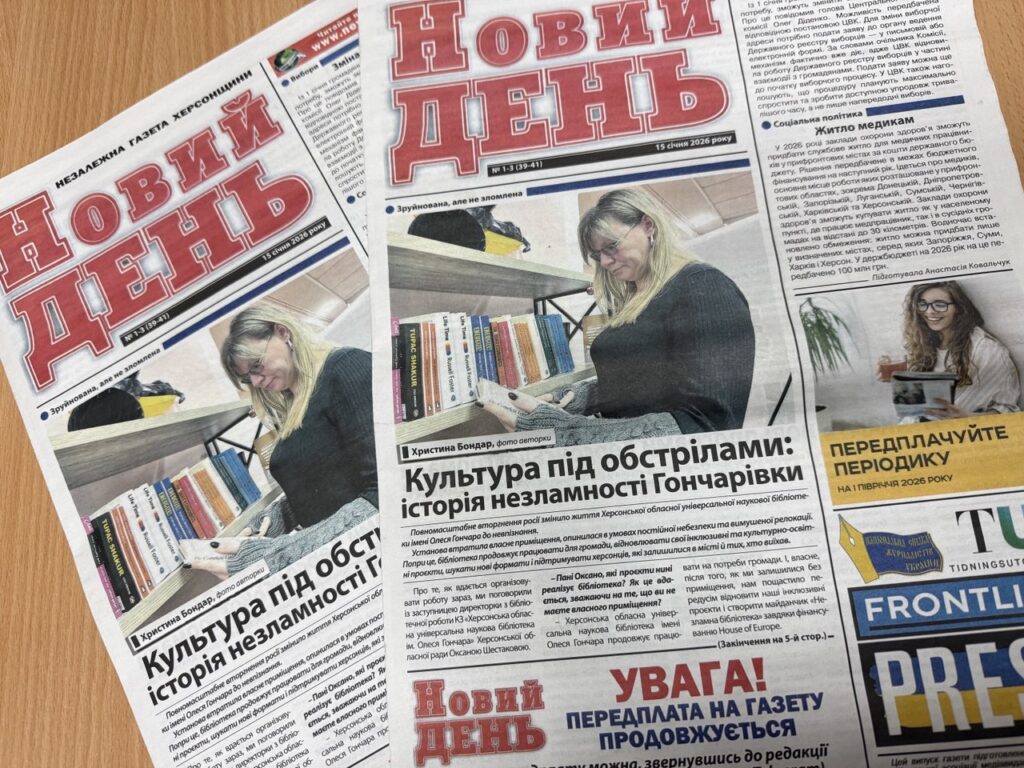
One example of effective journalistic solidarity is the rescue of Novyi Den, a newspaper founded in Kherson. The newspaper team, being displaced persons, decided to suspend the publishing of the paper in January 2026 in the face of reduced international support. Editor Anatolii Zhupyna officially informed the Union about this decision.
“We in the Union were looking for a solution on how to preserve this significant newspaper for the Kherson Region,” said Sergiy Tomilenko. “The solution was found thanks to Oleksii Kovalchuk, the head of the Dnipropetrovsk regional organization of the NUJU. Since Dnipro already has operating expenses for the publication of the regional newspaper Visti Prydniproviya, the team offered to take on the costs for the Kherson newspaper as well – social networks, printing house, layout, and preparation. Now the team, the editorial center of the publication Novyi Den in Dnipro, already has the first issue of the Kherson newspaper, and the next one is being prepared. In the coming months, we expect that it will be published weekly.”
Sergiy Tomilenko called the preservation and strengthening of the trust of international partners a key achievement of the past year.
Thus, the Swedish Media Business Association responded to NUJU’s appeal and provided a targeted donation for direct six-month financial support to 25 frontline newspapers. Publications in the Zaporizhzhia, Donetsk, Sumy, Kharkiv, Kherson, and other frontline regions were selected on a competitive basis. Thanks to this donation, newspapers receive financial support that allows them not to close and continue to inform Ukrainians.
“Our active focus on the international arena, on strengthening cooperation with international partners, Unions, journalists, and organizations, is important because it allows us to survive,” concludes Sergiy Tomilenko.
Separately, the President of the NUJU noted cooperation with the General Staff of the Armed Forces of Ukraine and the increase in the number of military journalists among the members of the Union.
“We are glad when military journalists, colleagues involved in communications, in media production, choose membership in the NUJU,” the President of the Union noted. “There are two servicemen in the NUJU secretariat: Serhii Cherevatyi, the head of Ukrinform, and Volodymyr Danyliuk, the editor-in-chief of Volynska Hazeta newspaper, who serves in the communications of the West Command. And here is a recent example: Ivan Petrychak, head of the press service of the 24th brigade, which the Union helps with vehicle repairs, at the end of the year, he applied to become a member of the NUJU. Since he comes from Smila Town, Cherkasy Region, he will be accepted by the Cherkasy regional organization. We are glad that our colleagues chose this.”
Sergiy Tomilenko described the formats of support for military journalists. These include journalistic gatherings – in cars, walkie-talkies, and other equipment for press services working in areas of combat operations. Moral cooperation and the award Press Officers Are Important are also important. In February, the Day of Honoring Military Journalists will be held, at which the best press officers will also be awarded.
The President of the NUJU noted the readiness of the media to disseminate materials about heroes. There is a good experience of cooperation with the specialized agency Army.Inform the Union helps to give their materials a larger audience. For example, recently, the Land Forces’ communications officers asked journalists to prepare a publication about basic training. The newspaper “Ukraina Moloda” is already taking on this publication.
Separately, Sergiy Tomilenko emphasized the understanding of the partners of the General Staff of the importance of print media.
“They understand the importance of the printed word. After all, in the frontline territories, these are critically important media for informing,” said Sergiy Tomilenko.
This emphasis is especially important in conditions when many talk about the transition exclusively online, and printed publications often remain outside the attention of donors.
Summing up, Tomilenko thanked each participant of the meeting for their active work in 2025, for the coherence in cooperation.
“We all together maintain a network of journalistic solidarity, we maintain a network of mutual support of journalists and media in the current difficult wartime,” said Sergiy Tomilenko.
The Board unanimously approved the report on the activities of the NUJU in 2025 and approved priorities for 2026. Among them are the preservation and development of the network of Journalists’ Solidarity Centers, continued support for frontline media, and deepening international cooperation.
“It is difficult to stand and persevere during a long war period. “Now is a cold winter, massive russian shelling – new challenges. But together with the feeling of a friendly shoulder, there is hope for spring, for peace, for victory, for the future,” Tomilenko concluded his speech.
NUJU Information Service












Discussion about this post